Home cooks searching for sichuan stir fry recipe need a sequence they can repeat: prep first, mix the sauce before heat, cook in stages, and finish with a light glossy coating. The method works only when sauce ratio, wok heat, ingredient size, and food-safety checks stay visible.
Quick Answer
A reliable Sichuan-style stir fry depends on preparation and sequence: cut everything before heating the pan, mix the sauce first, cook the protein or firm vegetable separately, bloom aromatics briefly in oil, then return the ingredients and add sauce at the end. For the 2 to 3 serving batch below, the sauce uses 120 ml stock or water, 1 tablespoon light soy sauce, 1 tablespoon Shaoxing wine, 2 teaspoons black vinegar, 1 teaspoon sugar, and 1 teaspoon cornstarch. These are the same amounts listed in Base Ingredients; there is no separate 2:1:1 sauce formula. Treat this as a flexible home-cooking starting mixture, not a universal Sichuan sauce ratio.
Basic Facts
Sichuan Stir Fry Recipe: Base Ingredients
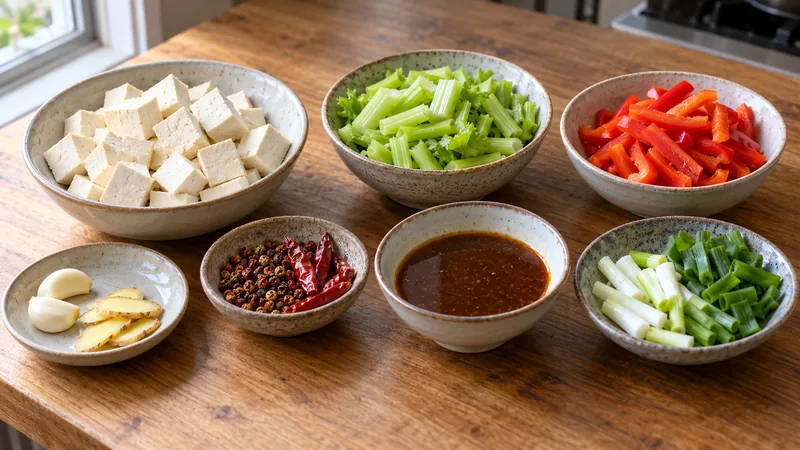
For 2 to 3 servings, choose 450 g firm tofu, mushrooms, sliced chicken thigh, or sliced pork; 2 cups vegetables such as celery, bell pepper, green beans, or cabbage; 2 cloves garlic; a thumb-sized piece of ginger; 2 scallions; 1 to 2 teaspoons Sichuan peppercorn; dried chilies to taste; and 2 tablespoons neutral cooking oil, divided between the initial browning and the aromatic stage. The illustrations show firm tofu with celery and red bell pepper. Use one main ingredient for a batch rather than combining every listed option. Mix 120 ml stock or water, 1 tablespoon light soy sauce, 1 tablespoon Shaoxing wine, 2 teaspoons black vinegar, 1 teaspoon sugar, and 1 teaspoon cornstarch.
Use less chili and peppercorn at first. The sauce and aromatics should support the main ingredient rather than hide it.
Heat and timing
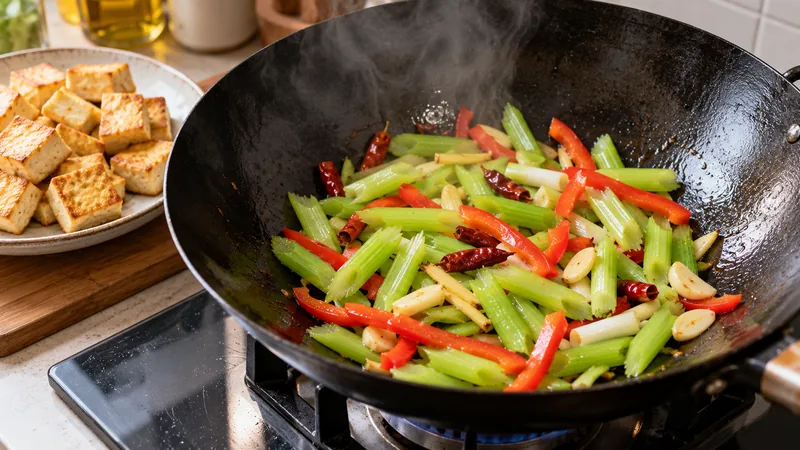
- Cut the protein and vegetables into similar bite-sized pieces. Keep watery vegetables separate from quick-cooking ones.
- Mix the sauce completely so the cornstarch does not settle at the end.
- Heat a dry wok or wide skillet, then add roughly half the oil. Do not splash water into hot oil to check the heat. Brown dried firm tofu or cook the chosen sliced meat in a single layer, working in batches when needed, and set it aside. For mushrooms, cook them separately with enough space for released moisture to evaporate, then set them aside before cooking the aromatics. Meat must still reach its appropriate safe final temperature before serving; browning alone does not establish doneness.
- Add the remaining oil as needed. Briefly infuse it with Sichuan peppercorns and dried chilies, then add garlic, ginger, and scallion whites. Whole peppercorn husks can be removed after infusion if you prefer not to bite into them. Lower the heat if the chilies darken rapidly or the garlic scorches.
- Add firm vegetables first, followed by quick-cooking vegetables. Celery and bell pepper can retain a light crunch. If using green beans, boil them separately until thoroughly cooked before adding them to the wok; a brief stir-fry or crisp appearance is not a reliable doneness check for beans.
- Return the protein, stir the sauce again, and pour it around the hot pan. Toss until glossy and cooked through.
- Finish with scallion greens and taste for salt, acidity, and heat.
The sauce should cling lightly rather than form a thick coating. If the pan is crowded, cook in batches; trapped steam prevents the browned, quick texture associated with a good stir fry.
Substitutions that work
Chicken thigh, pork shoulder, firm tofu, and mushrooms can use the same method, but cooking time changes. Broccoli may need pre-cooking; green beans must be thoroughly cooked in boiling water before the final stir-fry. Do not serve raw or inadequately cooked beans. Leafy greens need only a short final toss. If Shaoxing wine is unavailable, dry sherry is a closer substitute than a sweet cooking wine. If black vinegar is unavailable, use a smaller amount of rice vinegar and expect a brighter, less malty finish.
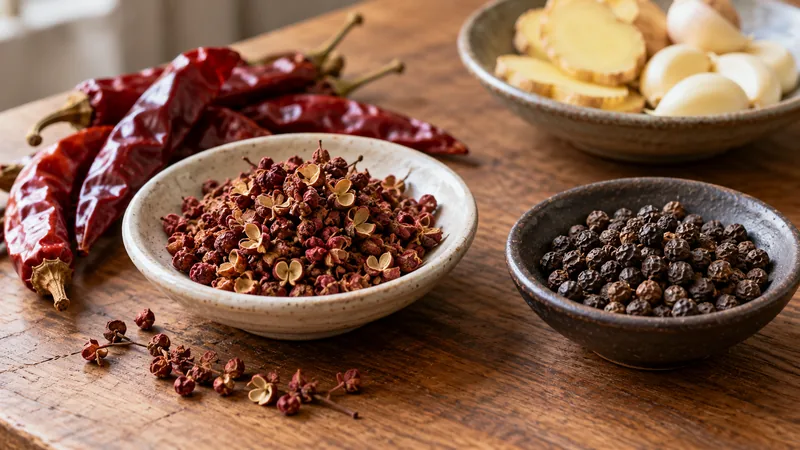
Do not replace Sichuan peppercorn with ordinary black pepper and expect the same aroma. Black pepper adds heat but not the citrus-like, numbing fragrance. Use less of a substitute and describe the result as Sichuan-inspired.
For neutral food-safety guidance, compare final cooking and leftover handling with the safe minimum temperature chart before adapting the method.
Food-safety and texture checks
Use separate utensils for raw protein and cooked food. Use a food thermometer for meat. FoodSafety.gov lists 74°C (165°F) for poultry and reheated leftovers; whole pork cuts require 63°C (145°F) plus a 3-minute rest, while ground pork requires 71°C (160°F). Tofu and vegetables should be hot throughout. This recipe does not specify seafood; use a seafood-specific method if adapting it. Refrigerate leftovers promptly in a shallow container and reheat thoroughly.
For sichuan stir fry recipe, the practical control point is timing. If aromatics burn before vegetables enter the pan, the sauce cannot rescue the flavor.
A second sichuan stir fry recipe check is ingredient size. Pieces that cook at different speeds should be separated or staged so the final texture is crisp rather than watery.
When cooking sichuan stir fry recipe, stir the sauce again immediately before adding it. Cornstarch settles quickly, and an uneven sauce can turn glossy coating into thick patches.
The safest sichuan stir fry recipe substitution note is limited: tofu, mushrooms, chicken, and pork can use the same sequence, but each needs a different cook time and safety check.
A final sichuan stir fry recipe review should confirm sauce ratio, heat order, ingredient doneness, and leftover handling. Those checks keep the method useful without claiming every variation is identical.
For a weeknight sichuan stir fry recipe, keep a small bowl beside the stove for sauce, another for aromatics, and another for quick-cooking vegetables. That setup prevents rushed chopping while the pan is already hot.
A reliable sichuan stir fry recipe should taste savory, bright, lightly spicy, and aromatic rather than simply hot. If the chili dominates the plate, reduce dried chilies before adding extra sugar or soy sauce.
When testing this sichuan stir fry recipe, write down pan size, batch size, sauce amount, and the order in which vegetables entered the pan. Those notes explain texture problems better than guessing after dinner.
The most common sichuan stir fry recipe mistake is adding sauce too early. Sauce that enters before vegetables release steam can become thin, while sauce added after the pan is hot can coat quickly.
Use the same sichuan stir fry recipe method for tofu only after drying the tofu surface and turning gently. Firm tofu breaks if it is tossed like sliced meat, so the sequence needs a slower hand.
For the mushroom variation, follow the separate cooking stage in step 3 so released moisture does not dilute the final glaze.
A family version of sichuan stir fry recipe can keep the numbing aroma mild. Start with a small amount of Sichuan peppercorn, then add more in a later batch if everyone likes the fragrance.
The final plate of sichuan stir fry recipe should be served quickly because crisp vegetables soften as they sit. If the dish waits, keep the sauce light and avoid covering the pan tightly.
Before publishing or saving a sichuan stir fry recipe note, confirm that raw-protein tools, cooked-food tools, and leftover instructions remain separate. That safety layer belongs beside the technique, not after it.
This sichuan stir fry recipe is intentionally a base formula. Once sauce balance and heat order work, a cook can move to a specific dish without confusing a flexible method with one fixed restaurant recipe.
If the pan cools down, pause and let it recover before adding the next batch. A steady hot surface matters more than rushing every ingredient into one crowded pan, especially when vegetables and protein release moisture at different speeds.
After serving, compare aroma, salt, acidity, texture, and heat level while the dish is still warm. That short tasting record makes the next batch easier to adjust than a vague memory of whether it tasted spicy enough.
For related cooking routes, compare this method with the Sichuan recipes hub, a focused Sichuan mapo eggplant recipe, and the classic mapo tofu recipe.
Quick reference
Recipe references
This page presents a flexible Sichuan-style home stir fry rather than one fixed traditional dish. The sauce quantities above are a starting formulation for this batch, not a claim of kitchen testing. For staged wok technique, see The Woks of Life stir-fry sauce method; for husk use and flavor differences, see its Sichuan peppercorn guide. Meat doneness follows the linked FoodSafety.gov temperature chart.
For bean safety, the Hong Kong Centre for Food Safety bulletin on bean toxins advises thorough cooking and warns against eating raw or inadequately cooked beans.
Frequently Asked Questions
What makes a stir fry Sichuan-style?
The combination of chili, Sichuan peppercorn, aromatics, savory sauce, and fast staged cooking creates a Sichuan-style profile. Ingredient and heat choices can vary.
Can I make this recipe without Sichuan peppercorn?
Yes, but the numbing citrus-like note will be missing. Use a smaller amount of black pepper only as a heat substitute, not as an equivalent flavor.
Why should the sauce be mixed before cooking?
Cornstarch settles quickly. Mixing first distributes the seasoning and helps the sauce thicken evenly when it hits the hot pan.
How do I keep vegetables crisp?
Cut evenly, avoid crowding, add firm vegetables first, and cook quick vegetables only briefly. A wide pan helps moisture escape.
Can I use tofu instead of meat?
Yes. Use firm tofu, dry its surface, brown it separately, and return it at the sauce stage so it does not break apart.