Sichuan-style crispy potatoes have a cooked center and a pan-fried exterior. Parboiling and frying are separate stages; this is not shredded-potato stir-fry or cold cucumber salad. Small potatoes can be cooked whole, while larger ones should be cut into even bite-size pieces.
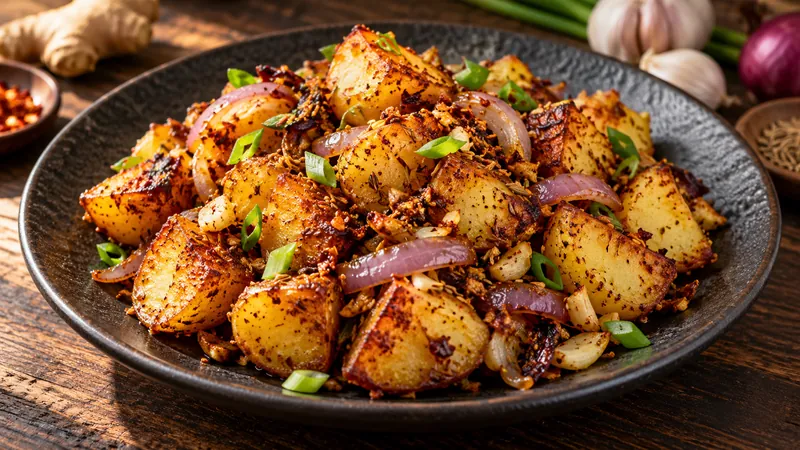
Quick Answer
Simmer the potatoes until just cooked, drain and allow surface water to leave, then pan-fry until the exterior colors. Add garlic, ginger, scallion and the chosen chili/cumin seasonings near the finish rather than boiling or chilling cucumber.
Basic Facts
| Potatoes | 500 g small potatoes, or large potatoes cut into bite-size pieces |
|---|---|
| Oil | 2 tablespoons, divided |
| Aromatics | 2 scallions; 2 tablespoons chopped garlic; 1 tablespoon chopped ginger; 1/4 red onion |
| Seasoning | Salt to taste; up to 2 tablespoons chili powder and 1 tablespoon cumin powder, adjusted for heat |
| Optional additions | 1 tablespoon chili oil and a small amount of coriander |
Step-by-Step Sichuan Crispy Potatoes
Wash the potatoes and choose one consistent size. Peel or retain thin skin as desired; choose sound potatoes and discard any that are spoiled or of uncertain condition. Simmer small whole potatoes or even cut pieces until just cooked through. About twelve to fifteen minutes is a published starting reference, but judge the actual pieces rather than promising that time for every potato.
Drain thoroughly before frying. The potatoes should remain intact instead of breaking into mash. Prepare the garlic, ginger, white and green scallion portions and red onion separately. The exterior crisping happens in the pan after cooking; salt-and-drain cucumber instructions do not belong here.
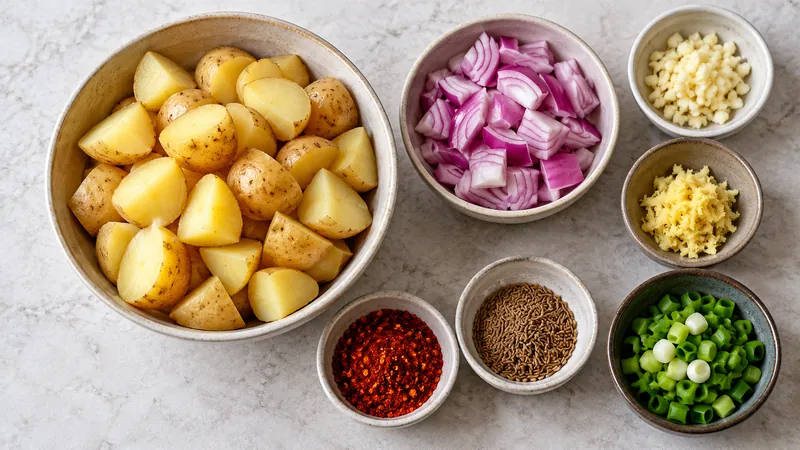
Potato Cut, Parboiling, and Crisp Surface
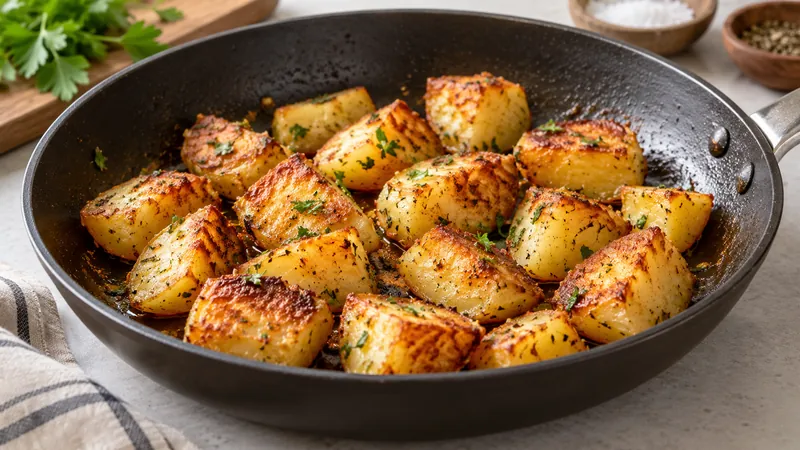
Heat about 1 1/2 tablespoons oil in a pan, add the drained potatoes and turn them as their surfaces become golden. Leave room for pan contact rather than stacking the pieces deep. Do not add a large wet batch to hot oil. Potatoes that are cooked but wet need drainage, not an extra dose of chili powder to disguise softness.
Use similarly sized chunks throughout this batch rather than combining thin shreds with large pieces. An intact small potato and a large cut chunk need different simmering time. Keep the explanation tied to the cut actually used instead of assigning a guaranteed crisp result.
Practical Examples for Chili Balance and Mixing Order
Move the potatoes aside and add the remaining 1/2 tablespoon oil to the center, using less only if sufficient oil remains in the pan. Cook garlic, ginger and scallion whites briefly until aromatic, then cook the red onion until softened. Toss these with the potatoes. Add salt, chili powder and cumin gradually; optional chili oil is an extra seasoning, not the oil used for the entire frying stage.
Use less chili powder if the product is strong. Add coriander and scallion greens near the finish if using them. This cumin/chili version is a stated variation; do not claim every Sichuan potato dish has the same spices. The final surface should remain visible under the seasoning, not be covered by a thick red sauce.
Common Mistakes and Food Safety
When draining, use a colander that supports the cooked pieces without crushing them. Let visible surface water leave before frying, but do not leave cooked potatoes at room temperature for hours to dry. Test the largest piece from the simmered batch: its center should be cooked without requiring the smaller pieces to collapse. For the pan stage, make space for the cut faces to touch the cooking surface. If working in batches, keep the amounts of potato and seasoning consistent so one panful is not much saltier than another.
Refrigerate leftovers promptly in shallow containers at 4°C (40°F) or below. Apply the two-hour limit outside refrigeration, shortened to one hour if conditions exceed 32°C (90°F). Reheat leftovers to 74°C (165°F); a crisp-looking edge does not establish the temperature at the center. Keep used raw-meat boards and utensils away from the cooked potatoes. Check the actual chili-oil label for allergens rather than assuming that every jar contains only oil and peppers.
Serve hot soon after the frying stage. Do not treat these potatoes as a ready-to-eat cold cucumber preparation. Avoid leaving a warm cooked batch standing for an extended period and refrigerate leftovers promptly. Reheating may change the crust and should not be described as giving an identical fresh-fried result.
The main avoidable errors are uneven pieces, overcooking the simmered potatoes, wet surfaces and scorched aromatics. Correct the relevant stage rather than adding oil or spice indiscriminately. Use a stable board for any cutting and dry food before it meets hot oil.
Quick reference
Even potato size; cook through without collapse; drain; pan-fry; cook aromatics separately and add seasonings late. Cumin/chili is the specified version, not a universal rule.
Recipe references
- www.chinasichuanfood.com recipe reference
- FoodSafety.gov: cooked-food handling
- FoodSafety.gov: cooked-food handling
Frequently Asked Questions
Should I shred the potatoes?
Not for this version. Use small potatoes or even bite-size pieces; shredded stir-fry is a different dish.
Is twelve minutes guaranteed?
No. It is a starting reference; test the actual potatoes for a cooked center and intact shape.
Why are they not crisp?
Check drainage, pan crowding and surface contact before adding more spice.
Does every version use cumin?
No. This recipe specifies the cited cumin/chili version.
Can I skip coriander?
Yes. It is optional; keep the image and ingredient description consistent.