Steamed pork with rice powder (fen zheng rou) is sliced pork belly coated in seasoned, coarsely ground toasted rice and steamed until the pork is tender and the coating has softened. This version uses doubanjiang and Sichuan pepper; potato or taro can form an optional base. 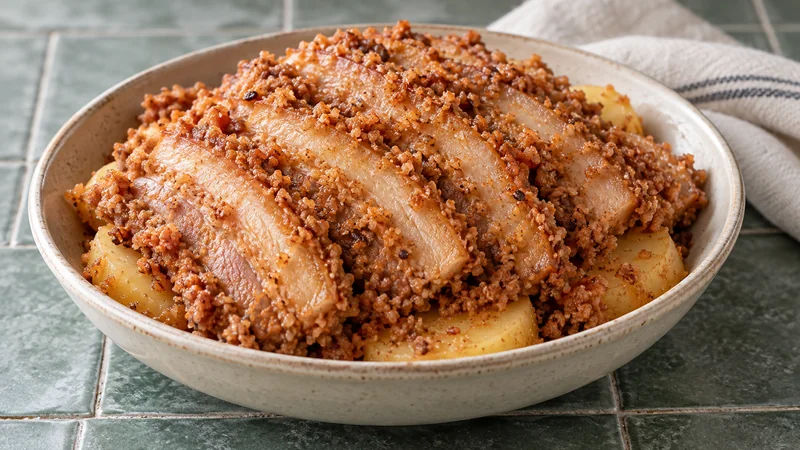
Quick Answer
Steamed Pork with Rice Powder works when the pork is seasoned deeply, coated evenly, and steamed until soft without becoming pasty or greasy.
Basic Facts
- Dish type: Sichuan-style steamed pork dish
- Texture goal: Soft pork with fragrant rice powder coating
- Main check: Pork cut, seasoning time, powder amount, and steam duration
- Common mistake: Adding too much water or packing the bowl too tightly
Quick reference: Steamed Pork with Rice Powder = pork cut + marinade + rice powder coating + steady steaming.
Steamed Pork with Rice Powder, or fěn zhēng ròu in Sichuan dialect, is a beloved classic of Sichuan cuisine that balances savory, spicy, and aromatic flavors. It’s not just a dish—it’s a testament to Sichuan’s mastery of turning simple ingredients into something deeply satisfying.
If you’ve ever enjoyed Mapo Tofu or Dan Dan Noodles, you’ll love how this dish uses similar core techniques but in a gentle, steamed form that highlights the pork’s tenderness. For home cooks, it’s approachable yet packed with authentic Sichuan flair, making it perfect for weeknight meals or small gatherings.
The Story Behind Steamed Pork with Rice Powder
Steamed Pork with Rice Powder has roots in Sichuan’s rural cooking traditions, dating back centuries. It was originally a way to stretch pork during lean seasons—using rice powder to bulk up the meat while adding flavor.
Over time, it evolved into a staple of Sichuan’s “gentle cooking” category, alongside dishes like Steamed Fish with Pickled Vegetables. Unlike bold, fiery dishes such as Kung Pao Chicken, this dish relies on layered, slow-brewed flavors rather than intense heat.
In Sichuan, it’s often served at family feasts and neighborhood gatherings. Many home cooks pass down their own versions, adjusting spices to suit local tastes—some add extra doubanjiang for heat, others include potatoes or taro at the bottom of the steaming dish to soak up the pork’s juices.
It’s also a common offering at Sichuan street stalls, where vendors steam it in large bamboo baskets for quick service. This dish is a perfect example of Sichuan cuisine’s diversity: it’s not just about spice, but about balancing flavors for every palate.
What Makes Steamed Pork with Rice Powder Special
What sets this dish apart from other steamed pork recipes is its unique rice powder coating. The combination of glutinous rice and long-grain rice gives it a soft, slightly chewy, granular coating that clings to the pork.
The addition of toasted Sichuan peppercorns adds a subtle numbing aroma (málà) that’s characteristic of Sichuan cooking, without overwhelming the dish.
Another key feature is the slow steaming process, which ensures the pork stays tender and juicy. Unlike pan-fried pork, steaming locks in moisture, making each bite soft and flavorful.
The marinade—made with doubanjiang, light soy sauce, and rice wine—infuses the pork with depth, while the optional vegetables (like potato or taro) add earthiness and soak up all the delicious juices. This balance of textures and flavors is why it’s a favorite among both locals and food lovers around the world.
Ingredients for Steamed Pork with Rice Powder
- 300g pork belly (sliced into 5mm thick pieces, against the grain)
- 2 tbsp Sichuan doubanjiang (chili bean paste)
- 1 tsp Sichuan peppercorns (whole, toasted)
- 1/2 cup glutinous rice
- 1/2 cup long-grain rice
- 1 tbsp light soy sauce
- 1 tsp dark soy sauce
- 1 tbsp Chinese rice wine (or Shaoxing wine)
- 1 tsp granulated sugar
- 1 tsp grated fresh ginger
- 1 clove garlic (minced)
- 1 small potato (sliced into 1cm rounds, optional)
- 1 small taro (peeled and sliced into 1cm rounds, optional)
How to Make Steamed Pork with Rice Powder
- Heat a dry wok over medium heat. Add 1/2 cup glutinous rice and 1/2 cup long-grain rice.
- Toast for 5 minutes, stirring constantly, until the rice turns pale golden and fragrant.
- Add 1 tsp whole Sichuan peppercorns to the wok. Toast for 1 more minute, then remove from heat and let cool completely.
- Grind the toasted rice and peppercorns in a spice grinder or food processor into a coarse powder (don’t make it too fine—coarse is better for texture).
- In a large bowl, combine the sliced pork belly, 2 tbsp doubanjiang, 1 tbsp light soy sauce, 1 tsp dark soy sauce, 1 tbsp rice wine, 1 tsp sugar, grated ginger, and minced garlic. Mix well to coat all pork slices.
- Cover and refrigerate the pork while it marinates for 20 minutes. This allows the flavors to penetrate the meat.
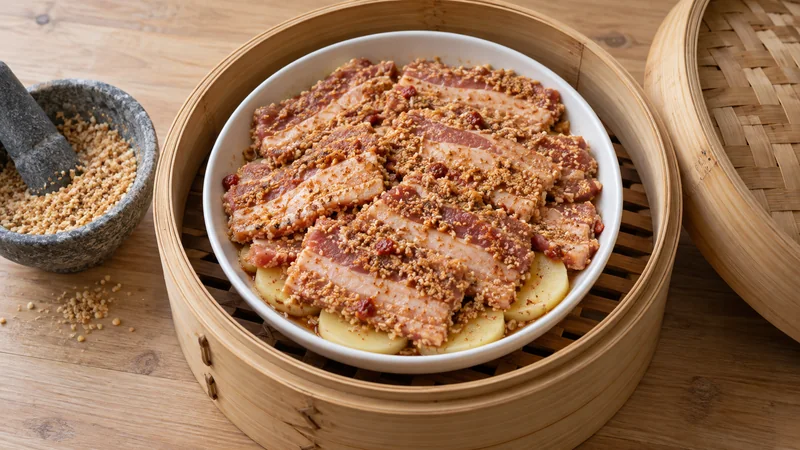
- While the pork marinates, prepare the steaming dish. If using potato or taro slices, arrange them at the bottom of a heat-safe plate or bamboo steamer basket.
- After marinating, add the ground rice powder to the pork bowl. Toss gently until every slice is evenly coated with the powder.
- Arrange the coated pork slices on top of the potato/taro (if using) in the steaming dish. Make sure the slices are not overcrowded.
- Bring a pot of water to a rolling boil. Place the steaming dish in a steamer basket over the boiling water.
- Cover and maintain steady steam, keeping the bowl above the water. The original 45 minutes is an estimate, not a safety guarantee: continue until the rice coating is softened and the pork is tender. Check the thickest pork slices with a food thermometer for at least 145°F (63°C), followed by at least a 3-minute rest. Check the water level halfway through to ensure it doesn’t run dry.
- Once done, carefully remove the steamer. Let it rest for 5 minutes before serving.
Common Mistakes with Steamed Pork with Rice Powder
Many home cooks make small errors that affect the dish’s authenticity and texture. The first mistake is skipping the toasting step.
Toasting the rice and peppercorns is critical—without it, the rice powder will taste bland and lack the nutty aroma that defines this dish. Always toast until the rice is golden and the peppercorns release their fragrance.
Grind the toasted rice coarsely for a granular coating. After steaming, the rice should be softened, not crunchy or raw; an extremely fine grind changes the texture.
Aim for a coarse, sand-like texture when grinding. If you don’t have a spice grinder, you can use a mortar and pestle for a more traditional grind.
Keep steady steam and enough water in the pot; avoid packing the pork tightly so steam can circulate. The final texture and a thermometer check matter more than assigning one precise steamer temperature.
A pressure cooker needs instructions for that model and this preparation. Do not treat a fixed 25-minute conversion as a guarantee of tender rice or safely cooked pork.
Serving & Storage
Steamed Pork with Rice Powder is best served hot, straight from the steamer. Pair it with steamed white rice to balance the flavors, or add a side of Hot and Sour Soup for a complete Sichuan meal.
For an extra touch, sprinkle a pinch of toasted sesame seeds or a drizzle of sesame oil on top before serving.
Refrigerate leftovers promptly in a covered container and use within 3 days, as the original recipe suggests. Reheat by steaming or in a microwave until the food reaches 165°F (74°C); a fixed 10-minute reheat is not a safety check.
Avoid freezing this dish, as the texture will suffer when thawed.
Frequently Asked Questions
Can I make Steamed Pork with Rice Powder vegetarian?
Yes, you can adapt this dish to be vegetarian by substituting pork with firm pressed tofu, lotus root slices, winter melon, or even mushrooms like shiitake.
Keep the rice powder (the listed mix of glutinous and long-grain rice) as is, and adjust seasonings to match the original savory, slightly spicy profile—add extra soy sauce, umami paste, or fermented beans to replace the depth of pork.
What makes Steamed Pork with Rice Powder authentic Sichuan style?
Authentic Sichuan-style Steamed Pork with Rice Powder relies on key ingredients and techniques: it uses fatty pork belly for a tender, melt-in-mouth texture, Sichuan peppercorns for the signature numbing “ma” flavor, doubanjiang (spicy broad bean paste) for depth, and coarsely ground toasted rice for a fragrant, slightly coarse coating.
The pork is marinated thoroughly with these spices before slow-steaming to let the rice powder absorb the pork’s juices and seasonings.
How spicy is Steamed Pork with Rice Powder?
The spice level varies by recipe, but traditional Sichuan versions are moderately spicy with a noticeable numbing tingle from Sichuan peppercorns.
The listed doubanjiang supplies the chili heat; this recipe does not list chili oil. Choose a milder paste or use less to suit your taste, accounting for the change in saltiness.
For extra spice, add more chili flakes or fresh Sichuan chili peppers; some regional versions are milder, so checking a specific recipe’s ingredient list helps gauge the exact heat.
What can I serve with the dish?
This hearty, savory dish pairs well with light, refreshing sides to balance its richness.
Common pairings include steamed leafy greens like bok choy or spinach, cold garlic cucumber salad, simple tofu soup, or steamed rice to soak up the flavorful sauce.
It also complements tangy Sichuan pickled vegetables (like pickled mustard greens) to add a bright contrast to the dish’s depth.
Can I prepare this Sichuan classic ahead of time?
Yes, you can prep most of the dish ahead for convenience.
Marinate the pork slices with rice powder, seasonings, and spices the night before, then cover and refrigerate—this lets the flavors infuse deeper.
When ready to cook, arrange the pork loosely in a heatproof dish above the water and maintain steady steam. Use the method’s texture and thermometer checks rather than a separate fixed 30–45-minute rule.
Note that steaming too far in advance (more than 24 hours) may make the rice powder soggy, so it’s best to steam it right before serving for optimal texture.
Final Tip
For a restaurant-quality finish, add a small handful of fresh chopped scallions on top right before serving. This adds a bright, fresh contrast to the rich, savory flavors of the dish.
Don’t be afraid to adjust the spices to your taste—authentic Sichuan cooking is about balance, not strict rules. Once you master the basics, you can experiment with adding your favorite vegetables or adjusting the amount of doubanjiang to suit your palate.
Spicy Prawns: Sichuan Recipe and Home Cooking Tips Hot And Sour Shredded Potatoes: Sichuan Recipe and Tips Authentic Sichuan Chili Oil: Sichuan Home Cooking Guide Wikipedia