Sichuan cooking techniques are the backbone of authentic Sichuan cuisine, celebrated globally for its bold mala flavor, diverse textures, and balanced taste profiles. Rooted in the Sichuan Basin’s fertile agricultural lands and rich cultural heritage, these methods have been refined over centuries—shaped by migration waves, climate adaptation, and a philosophy of “using humble ingredients to create extraordinary flavors”. From the smoky wok hei of stir-frying to the tangy depth of fermented pickles, mastering these seven core techniques will let you recreate restaurant-worthy Sichuan dishes in your kitchen and unlock the true essence of this beloved cuisine.
Quick Answer: The seven useful Sichuan cooking techniques are wok stir-frying, deep frying, braising, steaming, pickling, simmering, and roasting. For home cooks, the practical skill is matching heat, oil, aromatics, and Sichuan peppercorn timing to the dish rather than adding more chili to everything.
Basic Facts
| Main skill | Control heat and texture before increasing chili or Sichuan pepper. |
|---|---|
| Best starter method | Wok stir-frying with prepared ingredients and short cooking windows. |
| Flavor anchor | Mala balance comes from chili heat, Sichuan pepper aroma, oil, and savory sauce. |
| Common mistake | Using one spicy sauce for every dish instead of choosing a method-specific technique. |
Quick Reference
- For wok dishes: read the Sichuan recipes collection and start with small batches.
- For mala flavor: use the Sichuan peppercorn guide before increasing chili oil.
- For dish examples: compare mapo tofu, twice-cooked pork, and Sichuan boiled fish.
- For cuisine context: see this external overview of Sichuan cuisine.
1. Wok Stir-Frying (Chao 炒): The Foundation of Authentic Sichuan Cuisine’s Smoky Boldness
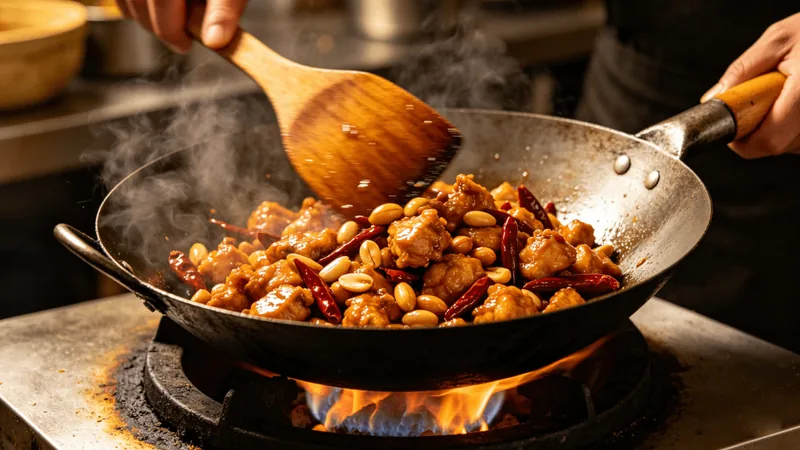
Wok stir-frying is the most iconic and widely used technique in Sichuan cooking, responsible for the vibrant, charred flavors that define dishes like Kung Pao Chicken and twice-cooked pork. At its heart, chao relies on three pillars: extreme heat, rapid movement, and precise timing—all working to lock in moisture, preserve texture, and create the coveted “wok hei” (wok breath), a unique smoky aroma that elevates simple ingredients to extraordinary heights.
The secret to perfect stir-frying starts with the right equipment. A heavy-bottomed carbon steel wok is non-negotiable; it retains heat evenly and develops that signature smokiness. Preheat the wok over high heat until it smokes slightly—this “hot wok, cold oil” method prevents ingredients from sticking. Choose high-smoke-point oils like peanut or refined sesame oil, as they can withstand the intense heat without burning.
Ingredient preparation is equally crucial. Cut meats into thin, uniform slices and vegetables into julienne strips or small chunks—this ensures quick, even cooking. Never overcrowd the wok; adding too many ingredients lowers the temperature, turning stir-frying into steaming and robbing dishes of wok hei. Cook in batches, removing ingredients as they’re done to keep the wok hot. For example, in Kung Pao Chicken, diced chicken is stir-fried first until golden, then set aside while dried chilies and peanuts are toasted, before reuniting with a sweet-savory sauce. The speed of stir-frying keeps meats tender and vegetables crisp, while high heat melds spices and sauces into a cohesive, intense flavor that’s quintessentially Sichuan.
2. Deep Frying (Zha 炸): Crisp Texture for Authentic Sichuan Cuisine
Deep frying is the key to Sichuan cuisine’s iconic crispy textures, adding a satisfying crunch to both savory dishes and street food favorites. Unlike Western deep frying, which often uses heavy batters, Sichuan zha emphasizes light, precise cooking—resulting in a crispy exterior that’s not greasy, paired with a juicy, flavorful interior.
Temperature control is make-or-break for successful zha. Most Sichuan deep-fried dishes require oil heated to 350–375°F (175–190°C). A candy thermometer works, but home cooks can test with a small piece of batter: if it sizzles immediately and floats to the surface, the oil is ready. Ingredients are often coated in a thin layer of cornstarch or egg white, creating a delicate crust that doesn’t absorb excess oil.
Classic zha examples include spicy crispy chicken (la zi ji) and Sichuan crispy pork (xiao su rou): small pieces are lightly coated, fried until crisp, then seasoned with chilies, Sichuan pepper, or a dry spice mix. By contrast, twice-cooked pork is usually simmered first, sliced, and returned to the wok with aromatics and fermented bean paste, so it belongs closer to stir-frying than deep frying. The goal is always balance: crispness without heaviness, letting the dish’s spices and sauces shine.
3. Braising (Wei 煨 / 卤): Slow-Cooked Richness in Sichuan Cooking Techniques
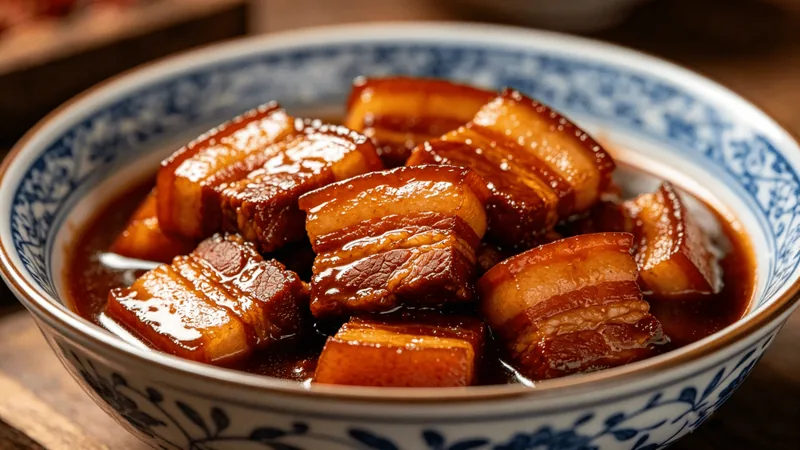
Braising, or wei, is a slow-cooking technique that transforms tough, affordable cuts of meat into melt-in-your-mouth masterpieces. It’s the method behind Sichuan’s most comforting, hearty dishes, where deep, complex flavors develop over hours of simmering in a seasoned broth.
Sichuan braising has two primary styles: red braising (Hong Shao) and savory braising (Lu). Red braising uses dark soy sauce, rock sugar, and rice wine, giving dishes a glossy reddish-brown color and a balanced sweet-savory flavor. The most famous red-braised dish is Hong Shao Rou (braised pork belly), where pork belly simmers for 1.5–2 hours in a broth of soy sauce, star anise, cinnamon, and ginger. The sugar caramelizes slightly, adding depth, while soy sauce provides umami, resulting in meat so tender it falls apart with a fork.
Savory braising, or lu, uses light soy sauce, spices, and sometimes tea leaves, creating a salty, aromatic broth called “lu shui” (braising liquid). This liquid is a family treasure—many Sichuan households keep a batch refrigerated, reusing and refining it over time to develop deeper complexity. Ingredients like eggs, tofu, or beef shank are added regularly, absorbing layers of flavor with each simmer. Braised duck feet and braised tofu are popular examples, where slow cooking lets ingredients soak up the broth’s richness fully. Patience is key here; rushing the simmering process results in tough, flavorless dishes, while slow cooking unlocks the true potential of humble ingredients.
4. Steaming (Zheng 蒸): Preserve Flavors for Authentic Sichuan Cuisine
Steaming is a gentle, healthy technique that preserves the natural flavors and nutrients of ingredients, making it a staple for delicate Sichuan dishes. Unlike stir-frying or deep frying, zheng uses moist heat, ensuring ingredients stay tender and juicy without losing their original taste. It’s a method that highlights the purity of ingredients, relying on subtle aromatics to enhance rather than overpower.
Sichuan steaming often incorporates classic aromatics like ginger, scallions, and rice wine. These add depth without masking the main ingredient’s flavor. Steamed whole fish (Zheng Yu) is a beloved home-style dish: a fresh fish is seasoned with salt, topped with ginger slices and scallion knots, and steamed for 8–10 minutes until flaky. It’s then drizzled with light soy sauce and hot oil, creating a burst of fresh, savory flavor that lets the fish’s quality shine.
Steamed pork ribs with glutinous rice (Zheng Pai Gu) is another iconic dish. Pork ribs are marinated in soy sauce, fermented bean paste, and spices, then wrapped in glutinous rice and steamed until the rice is soft and fragrant, absorbing the meat’s juices. Bamboo steamers are preferred for zheng, as they add a subtle woody aroma to the dish. Steaming is also used for dim sum-style dishes like steamed dumplings and buns, making it a versatile technique that balances Sichuan’s spicier offerings with lighter, more delicate options.
5. Pickling (Yan 腌): Tangy Balance for Authentic Sichuan Cuisine
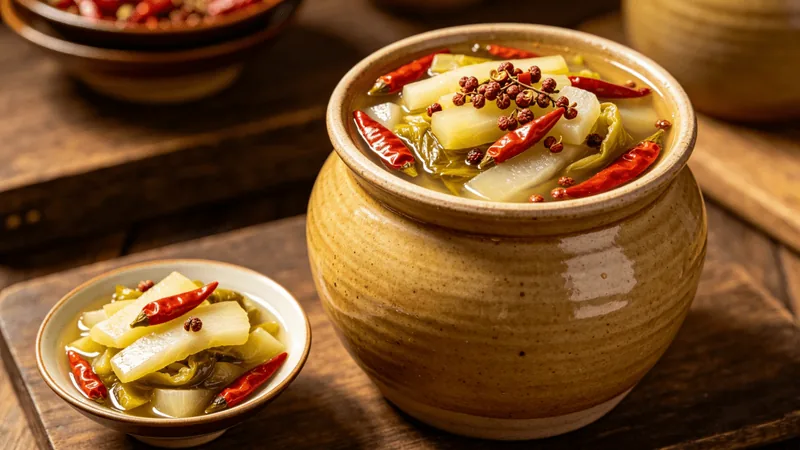
Pickling is a preservation technique that adds tangy, salty, and spicy flavors to vegetables—an essential element in Sichuan cuisine to balance the richness of oily or spicy main dishes. Sichuan pickles (Suan Cai) are so iconic they’re considered a condiment in their own right, used in stir-fries, hot pot, and as side dishes to cut through the intensity of mala flavors.
There are two main types of Sichuan pickling: quick pickling (Su Yan) and fermented pickling (Fa Jiao). Quick pickling uses vinegar, salt, sugar, and spices, allowing vegetables to pickle in just a few hours or days. This method is perfect for pickled cabbage or radishes, which are tangy and crisp, adding a fresh contrast to spicy meals like mapo tofu.
Fermented pickling relies on natural bacteria to transform vegetables in a brine of salt and water, taking weeks or months to develop a complex, sour flavor. This method creates staples like Sichuan mustard greens (Jie Cai) and sour bamboo shoots (Suan Zhu Sun), key ingredients in hot pot and fish-flavored eggplant. Fermented pickles have a deeper, more layered taste than quick pickles, and their tanginess cuts through the oiliness of Sichuan dishes perfectly. Many Sichuan households make their own pickles in ceramic jars, fermenting vegetables in a cool, dark place—no preservatives, just time and simple ingredients.
6. Simmering (Dun 炖): Gentle Heat in Sichuan Cooking Techniques
Dun is better understood as slow simmering or stewing, not Western-style poaching. In Sichuan cooking, gentle heat also matters for quick water-boiled dishes such as shui zhu yu, where fish slices are briefly cooked in a spicy broth to preserve tenderness.
Water-boiled fish (Shui Zhu Yu) is a classic shui zhu dish: thinly sliced fish is briefly cooked in a simmering base of chili oil, Sichuan pepper, garlic, and ginger, then served with bean sprouts and lettuce. The controlled heat keeps the fish tender and flaky, while the broth delivers a bold punch of mala flavor.
Plain-poached chicken (Bai Shui Ji) follows the same gentle-heat logic. Chicken is simmered in clear water with ginger and scallions until cooked through, then served with a dipping sauce of soy sauce, garlic, and chili oil. The chicken stays juicy with a subtle aromatic flavor, and the dipping sauce adds heat and umami. Gentle simmering is also used for nourishing soups, like pork rib soup with lotus root or chicken soup with wolfberries. The key to dun is maintaining a quiet simmer; boiling too vigorously makes ingredients tough and clouds the broth.
7. Roasting (Kao 烤): Smoky Depth for Authentic Sichuan Cuisine
Roasting, or kao, uses dry heat to add smoky, caramelized flavors to Sichuan dishes. While not as common as stir-frying or braising, kao is essential for certain iconic dishes and condiments, often using charcoal grills or ovens to replicate traditional smoky tastes.
Sichuan roasted garlic is a versatile condiment: whole garlic cloves are roasted until soft and sweet, then mashed into a paste for use in sauces, noodles, or as a topping for dumplings. Roasted Sichuan pepper is another key ingredient—dry-roasting the peppercorns enhances their numbing flavor, which is then ground into a powder for use in Kung Pao Chicken and spicy noodles. Roasting brings out the peppercorn’s citrusy, woody notes, making it more intense and aromatic.
Roasted meats are beloved street food in Sichuan, with grilled pork skewers (Chuanr) leading the way. Pork skewers are marinated in soy sauce, rice wine, Sichuan pepper, and chilies, then grilled over charcoal until charred on the outside and tender inside. Roasted duck neck is another addictive street food, with a smoky, spicy flavor that lingers. In home cooking, ovens or air fryers work well—cook at 375–400°F (190–200°C) to create a crispy exterior while keeping the inside juicy. Roasting often pairs with other techniques; for example, roasted pork belly may be sliced and stir-fried with vegetables, combining smoky depth with wok hei’s intensity.
Mastering Sichuan Cooking Techniques: Unlock Authentic Sichuan Cuisine
These seven Sichuan cooking techniques—stir-frying, deep frying, braising, steaming, pickling, simmering, and roasting—are the building blocks of authentic Sichuan cuisine. Each has a unique role: stir-frying delivers smoky boldness, braising creates rich comfort, steaming preserves purity, and pickling adds balancing tang. Together, they reflect Sichuan’s culinary philosophy of “one dish, one flavor; a hundred dishes, a hundred flavors”, where heat, numbing sensation, umami, and aroma harmonize seamlessly.
Mastery takes practice—start with simple dishes like stir-fried vegetables or steamed fish to refine heat control and ingredient prep, then move to complex recipes like braised pork belly or water-boiled fish. Remember, Sichuan cuisine is about balance: “spicy but not burning, numbing but not overwhelming, salty but not cloying”. By understanding these techniques, you’ll not only cook delicious meals but also gain a deeper appreciation for Sichuan’s cultural heritage—one that’s rooted in adaptability, creativity, and respect for ingredients.
To see these techniques in actual dishes, explore our Sichuan recipes collection. For more background on the cuisine, visit Wikipedia: Sichuan Cuisine.
Frequently Asked Questions
Which Sichuan cooking technique should beginners learn first?
Start with wok stir-frying because it teaches heat control, ingredient preparation, oil timing, and sauce timing in one short cooking window.
Is mala flavor only about adding more chili?
No. Mala depends on chili heat, Sichuan pepper aroma, oil, salt, aromatics, and timing. Too much chili can hide the texture and fragrance that make Sichuan dishes balanced.
Why do some Sichuan dishes use slower techniques?
Braising, simmering, and pickling build depth, softness, and tang that quick wok dishes cannot create. Sichuan cooking uses both fast heat and slow flavor development.