Quick answer: This page is a process and safety guide to Sichuan-style paocai, not a complete tested recipe for a mixed-vegetable jar. Use fresh produce, a food-safe fermentation vessel, accurately measured salt, a weight that keeps every piece submerged, and a way to monitor temperature and acidity. For exact quantities, follow a research-tested recipe that matches the vegetable you are fermenting; do not transfer a cucumber or cabbage formula to a different mixed batch.
Sichuan paocai (四川泡菜) is a broad household tradition rather than one fixed jar of vegetables. Cabbage, radish, carrot, green beans, chile, ginger, and other firm produce can all appear. The flavor is pleasantly sour and salty, sometimes fragrant with Sichuan pepper, but the useful distinction is technical: paocai is fermented in brine. It is not the same as pouring hot vinegar over vegetables, and it should not be treated as a tested canning recipe.
The safest way to make a first batch is to keep it small and observable. Follow a research-tested home-fermentation recipe for exact proportions, record what you used, keep the vegetables below the brine, and refrigerate the finished pickles. The National Center for Home Food Preservation publishes complete formulas for fermented dill cucumbers and sauerkraut. Use those only when the produce and method match; neither validates the broad mixed paocai jar described here.
What Sichuan Paocai Is—and What This Method Is Not
During lactic-acid fermentation, naturally present microorganisms convert sugars into acids. The falling pH creates the sour taste and contributes to preservation. The University of Minnesota Extension describes this as a low-oxygen process and advises monitoring a ferment until it reaches pH 4.60 or below and bubbling has stopped, then moving it to refrigeration.
That description does not make every salty jar safe. Acidity, salt concentration, temperature, produce condition, sanitation, and oxygen exposure all matter. The National Center for Home Food Preservation stresses that salt is important to the safety and texture of fermented pickles and that ingredient proportions in tested recipes should not be altered casually.
| Method | What creates the sourness | Storage assumption | What this article covers |
|---|---|---|---|
| Sichuan-style brine fermentation | Lactic-acid fermentation over time | Refrigerate after the monitored ferment is complete | Yes: process controls, flavor direction, and evidence limits |
| Fresh vinegar pickle | Added food-grade vinegar | Usually refrigerated unless a tested recipe says otherwise | No: a separate preparation method |
| Water-bath canned pickle | A tested acidified formula plus heat processing | Shelf-stable only when a validated canning recipe is followed | No: do not use this page as canning instructions |
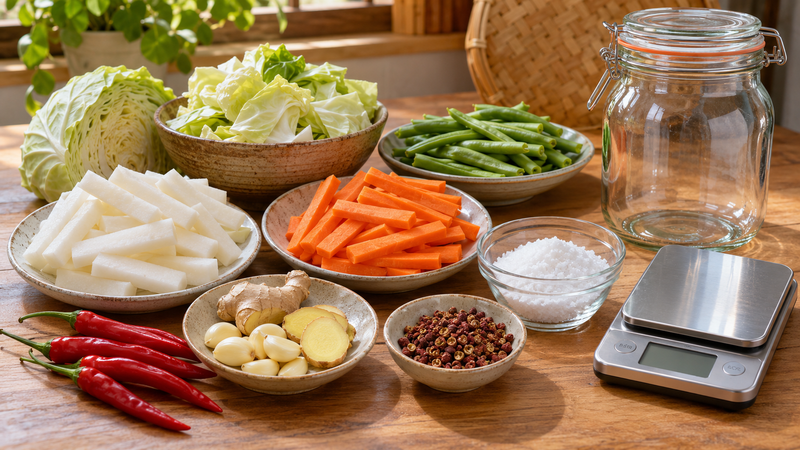
Step 1: Choose Firm Vegetables and Clean Equipment
Choose fresh, sound vegetables without soft spots or decay. A practical first mix is Napa cabbage, daikon or another firm radish, carrot, and green beans. Cut them into pieces that can be packed and removed cleanly, but do not make tiny fragments that float easily. Wash the produce under running water and drain it. Do not use soap or household sanitizer on food.
Use a food-safe glass jar, ceramic fermentation crock, or another nonreactive vessel intended for food. Avoid containers that once held non-food materials. You also need a lid or airlock, a fermentation weight that fits the vessel, clean tongs, a scale or accurate measuring tools, and preferably a calibrated pH meter or suitable food-range pH strips.
Traditional paocai crocks have a moat around the lid. Water in the moat forms a seal while allowing fermentation gas to escape. A modern jar with an airlock serves a similar practical purpose. An ordinary tightly sealed jar may build pressure and needs equipment-specific handling; do not improvise a vessel that cannot safely release gas.
Step 2: Use a Measured Brine, Not a Guess
Salt is not just seasoning in a fermented pickle. It affects microbial growth, texture, and the pace of fermentation. Use canning or pickling salt when a tested recipe calls for it, because anti-caking agents and unknown crystal sizes can complicate measurement. A scale is more repeatable than a spoon, especially when changing brands.
Published studies of Sichuan paocai often describe vegetables immersed in brine around 6–8% salt under anaerobic conditions. That range helps explain the traditional product and the research setting. It is not permission to choose any number in the range and assume the result is a validated home recipe. Studies may define percentage differently, use controlled starter cultures, test specific vegetable-to-brine ratios, or operate under production conditions that do not match a home kitchen.
For a home batch, follow the salt quantity and liquid quantity in a research-tested fermentation recipe. The University of Minnesota Extension gives wet-brine guidance that varies by vegetable and method, which is another reason not to copy one universal percentage into every jar. If you change the produce, vessel size, or batch mass, recalculate from the tested recipe rather than diluting or topping up by intuition.
Use soft or distilled water if your local water is very hard or strongly chlorinated. Dissolve the measured salt completely in the specified water. Add whole spices for aroma if they fit the recipe: a small amount of Sichuan pepper, dried chile, ginger, or garlic can create a recognizable Sichuan direction. Avoid adding oil, which can coat the surface and is not part of the controlled brine system described here.
Step 3: Pack the Jar and Keep Everything Submerged
Pack the firmer vegetables first and leave enough headspace for the weight, brine movement, and gas. Pour in the cooled measured brine, gently release trapped air pockets, then place the fermentation weight. The vegetables should remain under one to two inches of brine when your tested recipe and vessel allow that depth. Floating chile pieces, cabbage edges, or spices are not decorative; they are exposed food and should be brought below the surface.
Close the vessel using its designed lid, airlock, or water-seal system. Place it in a tray in case active fermentation pushes out a little liquid. Label the batch with the date, vegetables, brine recipe, room temperature, and any starter used. A short record is more useful than relying on memory when you compare batches.
Keep opening to a minimum. Research on Sichuan paocai shows that oxygen exposure changes the fermentation environment and can affect quality. If you need to inspect or sample, use clean utensils, take a separate portion, and close the vessel promptly. Do not eat from the sampling utensil and return it to the jar.
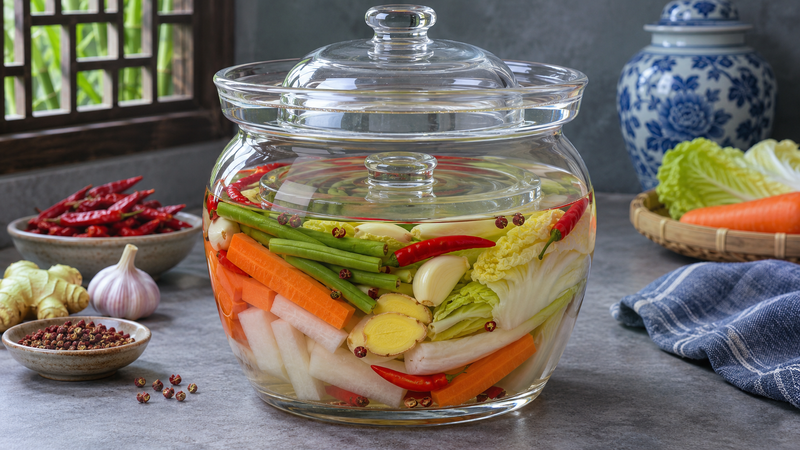
Step 4: Monitor Temperature, Activity, and pH
For many home vegetable ferments, the University of Minnesota Extension identifies 68–72°F (20–22°C) as an ideal range. Warmer conditions can make fermentation too fast and increase the risk of spoilage; temperatures below 60°F (16°C) can inhibit the process. Use the range specified by the recipe you are following, and measure the room rather than guessing from how the kitchen feels.
Bubbles, a cloudy brine, and a clean sour aroma can accompany active fermentation, but sensory cues alone do not establish safety. Check acidity with a calibrated meter or appropriate strips on a small separate sample. According to the extension guidance used here, the ferment is considered ready when the pH is 4.60 or below and bubbling has stopped. Take readings from a representative liquid sample and follow the meter manufacturer’s calibration and cleaning instructions.
Do not “rescue” an obviously spoiled batch by scraping off growth or adding vinegar. Discard the batch if you see mold, experience a foul or putrid odor, find slimy decay inconsistent with the recipe, or cannot verify that the solids stayed submerged. When the process departs from the tested method and you are uncertain, discarding is safer than tasting to decide.
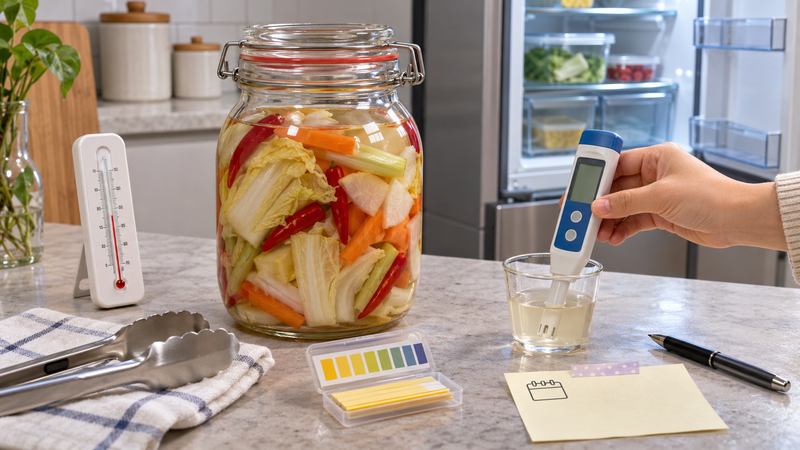
Step 5: Refrigerate and Serve the Finished Pickles
Once the monitored ferment meets the tested recipe’s completion criteria, move it to the refrigerator. Keep the vegetables under brine and use clean utensils each time you serve them. Refrigeration slows fermentation; it does not reverse poor handling or make an uncertain batch safe.
Serve paocai in small portions as a bright, salty-sour accompaniment rather than treating it as a complete vegetable serving. Drain what you need, cut large pieces if necessary, and return the covered container to refrigeration promptly. The exact refrigerated life depends on the recipe, acidity, salt, handling, and storage temperature. Follow the tested recipe’s storage limit instead of assigning one universal number.
The pickles can accompany rice, noodles, or a simple meal. They can also supply the sour-pickled note used in some Sichuan preparations, but a finished paocai jar is not automatically interchangeable with commercial pickled chile, ya cai, or zha cai. Our guide to Sichuan food ingredients helps separate these pantry categories, while the beginner Sichuan recipe guide offers dishes that do not require maintaining a ferment.
Traditional Flavor Choices Without Losing the Safety Controls
A paocai jar can vary by household. Whole Sichuan pepper adds a citrusy, numbing fragrance; dried chile contributes a warmer aroma; ginger and garlic add pungency. These are flavor decisions inside a controlled process, not substitutes for the measured salt, temperature, submersion, and acidity checks.
For the first batch, keep the vegetable list short and the spice amounts modest. That makes it easier to see whether a soft texture came from the produce, the cut size, the temperature, or an overly long fermentation. After a successful tested batch, change one flavor variable at a time while preserving the recipe’s safety-critical ratios and process.
Some traditional households maintain old brine and replenish it. A mature household culture can carry valued flavor, but its age is not proof of safety. A beginner should not borrow an unknown brine or assume that a strong smell means it is active in the right way. Start with a tested method, document the batch, and seek local extension guidance if you want to maintain a long-lived crock.
Common Mistakes With Easy Sichuan Pickles
| Mistake | Why it matters | Better control |
|---|---|---|
| Estimating salt by taste | The flavor at packing does not prove the required concentration. | Use the exact tested recipe and accurate scale or measures. |
| Letting food float above brine | Exposed pieces contact oxygen and are more vulnerable to unwanted growth. | Use a fitted food-safe weight and enough specified brine. |
| Fermenting in a very warm room | Excess heat can accelerate softening and spoilage. | Measure the actual temperature and stay within the recipe’s range. |
| Judging only by smell or bubbles | Those signs do not measure acidity. | Use pH monitoring plus the tested recipe’s time and process checks. |
| Treating fermentation as canning | A refrigerated ferment is not automatically shelf-stable. | Refrigerate; use a separate validated recipe for canning. |
Questions About Easy Sichuan Pickles
Are Sichuan pickles always very spicy?
No. Sourness and salinity define the brined ferment more than chile heat. You can use a small amount of dried chile or omit it, as long as you do not change the safety-critical proportions in the tested recipe.
Can I reuse the brine for another batch?
Do not assume an old brine is safe or equivalent to a fresh tested recipe. Reuse practices vary, and the previous batch’s acidity, salt, contamination history, and handling matter. Beginners should use a tested method and seek preservation guidance before maintaining a continuous crock.
Is a 6% brine the correct formula for every vegetable?
No. The 6–8% range appears in published research describing Sichuan paocai systems, but home recipes define salt in different ways and account for specific vegetables and brine ratios. Follow one tested recipe rather than applying one percentage universally.
Can I store the jar in a cupboard after it becomes sour?
Not on the basis of this guide. Refrigerate the finished ferment. Shelf-stable storage requires a separately tested canning process, not just sour taste or a single pH reading.
Sources and Evidence Boundary
- University of Minnesota Extension: preserving food at home by fermentation — temperature, submersion, pH monitoring, equipment, and refrigeration guidance.
- National Center for Home Food Preservation: tested fermented dill pickle recipe — exact cucumber-specific ingredients and processing conditions.
- National Center for Home Food Preservation: tested sauerkraut recipe — exact cabbage-and-salt formula and fermentation conditions.
- National Center for Home Food Preservation: fermenting information — salt, acidity, produce quality, and tested-recipe boundaries.
- Research on traditional Sichuan paocai fermentation — context for typical brine and low-oxygen production conditions, not a universal home recipe.
The generated images illustrate ingredients, submersion, and monitoring. They do not verify a batch. Exact safety depends on the complete tested recipe, measurements, equipment, handling, and storage.