Sichuan tofu recipes do not all need the same tofu or technique. Soft tofu works best when it can simmer gently in a seasoned sauce, firm tofu can be browned before it absorbs flavor, and silken tofu is most successful when it stays cold and the sauce is poured over it at the last moment. The three recipes below use one clear method for each texture: mushroom mapo-style tofu, home-style pan-fried tofu, and chilled silken tofu with chile oil.
A search for “tofu Sichuan recipes” often mixes these textures together. This guide separates them so the ingredient list and cooking method stay consistent.
Quick answer
Choose the tofu before you choose the method. Use soft or medium tofu for a spoonable mapo-style dish, firm tofu for pan-frying, and silken tofu for a chilled plate. Drain firm tofu well so it browns. Handle soft and silken tofu with a wide spoon instead of stirring hard. Bloom doubanjiang and aromatics in oil before adding liquid, then add ground Sichuan pepper near the end so its citrus aroma stays clear.
At a glance
| Dish | Tofu | Main technique | Active time | Texture target |
|---|---|---|---|---|
| Mushroom mapo-style tofu | Soft or medium | Gentle simmer | About 20 minutes | Tender cubes in a glossy, savory sauce |
| Home-style pan-fried tofu | Firm | Brown, then short braise | About 25 minutes | Crisp edges with a juicy center |
| Chilled silken tofu | Silken | Drain and dress | About 10 minutes | Cool, delicate tofu with a bright sauce |
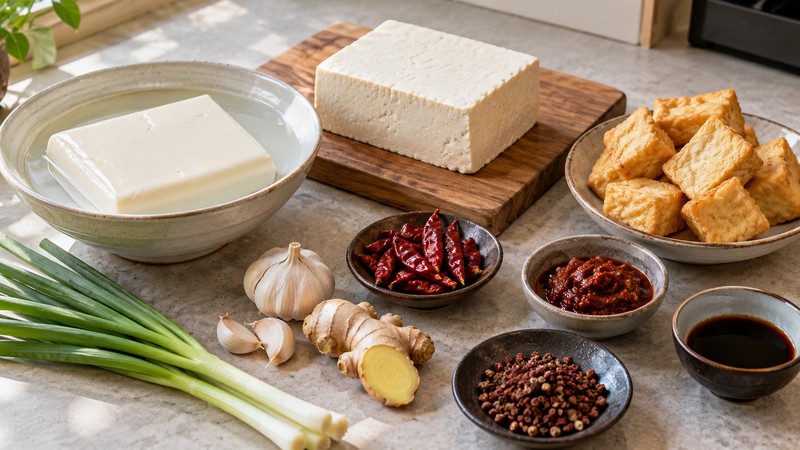
Quick reference: match tofu to heat
Soft tofu contains more water and breaks easily, so slide it into sauce and move the pan rather than repeatedly stirring. Firm tofu tolerates turning and browning; drying its surface is more important than pressing it aggressively. Silken tofu is fragile enough that transferring it intact is part of the recipe.
Doubanjiang varies in salt and heat. Taste the sauce before adding extra soy sauce. Sichuan peppercorn adds aroma and a tingling sensation, but burnt peppercorn tastes bitter. Toast it over low heat just until fragrant, cool it, and grind it separately.
Pantry base for all three recipes
Keep these ingredients available, then use the amounts listed in each recipe:
- plain tofu in the texture specified;
- Pixian-style doubanjiang for the two hot dishes;
- garlic, ginger, and scallions;
- light soy sauce and Chinese black vinegar;
- chile oil or dried chiles;
- whole Sichuan peppercorns;
- neutral cooking oil;
- sugar to round sharp salt and acidity;
- cornstarch for sauces that need a light glaze.
The recipes are meatless as written. They are household versions designed to teach technique; they are not a claim that Sichuan families or restaurants make each dish in only one way.
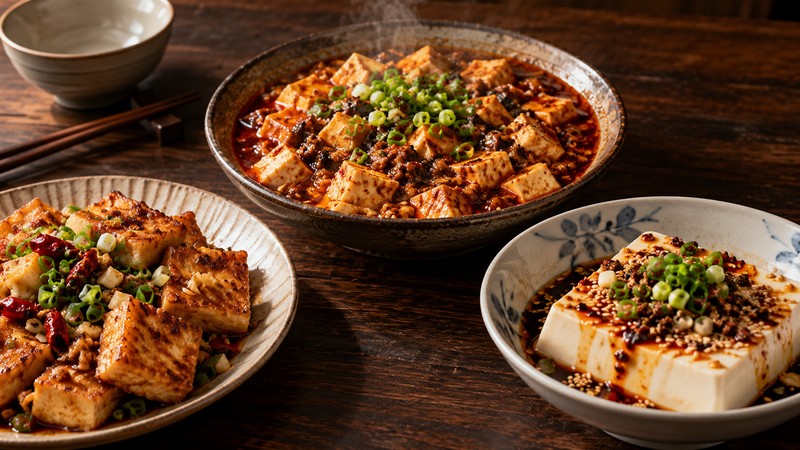
Recipe 1: mushroom mapo-style tofu
This version keeps the soft-tofu texture and chile-bean sauce structure associated with mapo tofu while using mushrooms in place of minced meat. For a meat-based version and more detail on the sauce, see the site’s mapo tofu sauce guide.
Ingredients
- 14 ounces (400 g) soft or medium tofu, cut into 3/4-inch cubes
- 5 ounces (140 g) fresh shiitake or cremini mushrooms, finely chopped
- 2 tablespoons neutral oil
- 1 1/2 tablespoons doubanjiang, finely chopped if coarse
- 1 teaspoon fermented black beans, rinsed and chopped, optional
- 2 garlic cloves, minced
- 1 teaspoon minced ginger
- 1 cup (240 ml) unsalted vegetable stock or water
- 1 teaspoon light soy sauce, only if needed after tasting
- 1/2 teaspoon sugar
- 2 teaspoons cornstarch mixed with 1 tablespoon cold water
- 1/2 teaspoon toasted ground Sichuan peppercorn, plus more to taste
- 2 scallions, thinly sliced
Method
- Bring a small saucepan of water to a bare simmer. Slide in the tofu and warm it for 2 minutes, then drain carefully. This firms the surface slightly without making the center rubbery.
- Heat the oil in a wok or skillet over medium heat. Add the mushrooms and cook for 4 to 5 minutes, until their released moisture has mostly evaporated and the pieces begin to brown.
- Lower the heat. Add doubanjiang and optional black beans; cook for about 45 seconds, stirring until the oil turns red and smells savory. Add garlic and ginger for 20 seconds. Do not scorch them.
- Add stock and sugar. Bring to a gentle simmer, then slide in the tofu. Simmer uncovered for 5 minutes, nudging the pan rather than stirring hard.
- Taste the liquid. Add the teaspoon of soy sauce only if the stock and doubanjiang have not already made it salty enough.
- Stir the slurry again and drizzle in half. Simmer for 20 seconds, then add only enough of the remainder to make a sauce that clings lightly to the tofu. Finish with ground Sichuan pepper and scallions.
The finished sauce should coat a spoon but still move around the tofu. If it turns pasty, add stock one tablespoon at a time.
Recipe 2: home-style pan-fried tofu
Firm tofu develops a browned surface before it meets the sauce. The sauce then seasons the crust while the center stays moist.
Ingredients
- 14 ounces (400 g) firm tofu
- 2 tablespoons neutral oil, divided
- 1 small red bell pepper, cut into thin strips
- 2 scallions, white and green parts separated
- 2 garlic cloves, minced
- 1 teaspoon minced ginger
- 1 tablespoon doubanjiang
- 1/3 cup (80 ml) unsalted vegetable stock or water
- 1 teaspoon light soy sauce
- 1 teaspoon Chinese black vinegar
- 1/2 teaspoon sugar
- 1 teaspoon cornstarch mixed with 2 teaspoons cold water
- 1/4 teaspoon toasted ground Sichuan peppercorn
Method
- Drain the tofu, pat it dry, and cut it into rectangles about 1/2 inch thick. Leave the pieces on a towel for 5 minutes while you mix the stock, soy sauce, vinegar, and sugar.
- Heat 1 1/2 tablespoons oil in a well-seasoned wok or skillet over medium-high heat. Add tofu in one layer. Cook without moving for 3 to 4 minutes, then turn and brown the second side for about 3 minutes. Transfer to a plate.
- Reduce to medium heat and add the remaining oil. Stir-fry bell pepper and scallion whites for 1 minute. Add doubanjiang for 30 seconds, followed by garlic and ginger for 20 seconds.
- Pour in the stock mixture and return the tofu. Simmer for 2 to 3 minutes, turning once so both sides take up sauce.
- Stir the slurry and add a little at a time until the liquid forms a thin glaze. Fold in scallion greens and ground Sichuan pepper, then remove from the heat.
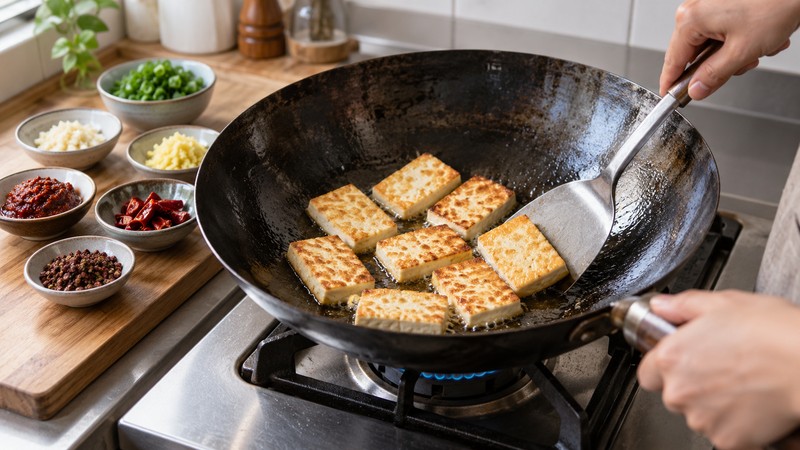
Use medium heat if the tofu spits heavily or the surface darkens before the center warms. For more examples of the same heat-control principle, compare the site’s Sichuan stir-fry guide.
Recipe 3: chilled silken tofu with chile oil
This no-cook dish depends on gentle handling and a balanced sauce. It is useful when the rest of the meal includes rich or fried foods.
Ingredients
- 12 ounces (340 g) chilled silken tofu
- 1 tablespoon light soy sauce
- 1 tablespoon Chinese black vinegar
- 1 tablespoon chile oil, including some chile sediment
- 1 teaspoon toasted sesame oil
- 1 teaspoon sugar
- 1 tablespoon finely sliced scallion
- 1 teaspoon toasted sesame seeds
- 1/4 teaspoon toasted ground Sichuan peppercorn
- 1 tablespoon roasted peanuts, crushed, optional
Method
- Whisk soy sauce, vinegar, chile oil, sesame oil, and sugar until the sugar dissolves.
- Open the tofu package and drain away the packing water. Place a serving plate over the container, invert both together, and lift the container slowly.
- Spoon the sauce over the tofu immediately before serving. Add scallion, sesame, ground peppercorn, and optional peanuts.
If the block breaks, serve it in wide spoonfuls instead of trying to reshape it. The taste and texture matter more than a perfectly intact rectangle.
Substitutions and what they change
| Substitution | Use it in | Effect |
|---|---|---|
| Medium tofu for soft tofu | Mapo-style dish | Slightly firmer cubes that are easier to handle |
| Extra-firm tofu for firm tofu | Pan-fried dish | Drier, chewier center; shorten the final braise |
| Miso plus chile oil for doubanjiang | Hot dishes | Similar savory direction but less fermented chile-bean character; season cautiously |
| Rice vinegar for black vinegar | Pan-fried or chilled dish | Brighter, simpler acidity with less malt depth |
| Mushroom stock for water | Mapo-style dish | More savoriness; check salt before adding soy sauce |
Do not substitute silken tofu into the pan-fried recipe. It is too fragile for the turning and browning step. Likewise, firm tofu can be dressed cold, but it will not give the custard-like texture of the chilled dish.
Storage and food-safety checks
Keep packaged tofu refrigerated according to its label. The FDA advises keeping the refrigerator at or below 40°F (4°C) and returning foods that require refrigeration promptly. Do not leave tofu dishes at room temperature for more than two hours, or more than one hour when the surrounding temperature is above 90°F (32°C). Refrigerate leftovers in shallow covered containers.
Discard tofu that has been held improperly or shows spoilage. Smell alone cannot prove food is safe. Use clean utensils for the chilled dish because it receives no further cooking after plating. See the FDA’s refrigerated food storage guidance for the general temperature and time rules.
Frequently asked questions
Which tofu is best for mapo-style tofu?
Soft or medium tofu gives a tender result while holding cubes well enough for a gentle simmer. Silken tofu can work but requires very careful handling; firm tofu produces a noticeably denser dish.
Do I need to press tofu before cooking?
Not for every recipe. Pat firm tofu dry before pan-frying, but heavy pressing can make it unnecessarily dense. Soft and silken tofu should not be pressed.
How do I keep tofu from sticking to the wok?
Dry the surface, preheat a clean seasoned wok or skillet, add oil, and let the first side set before moving it. If the tofu resists the spatula, give it another 30 seconds before turning.
Can these recipes be made less spicy?
Yes. Reduce chile oil and use a smaller amount of doubanjiang, then replace the missing sauce volume with stock. Because doubanjiang also supplies salt and savoriness, taste before adding extra soy sauce.
When should Sichuan peppercorn be added?
For the clearest aroma, add toasted ground peppercorn near the end or at the table. Whole peppercorn can flavor oil earlier, but it burns easily and may be unpleasant to bite into.