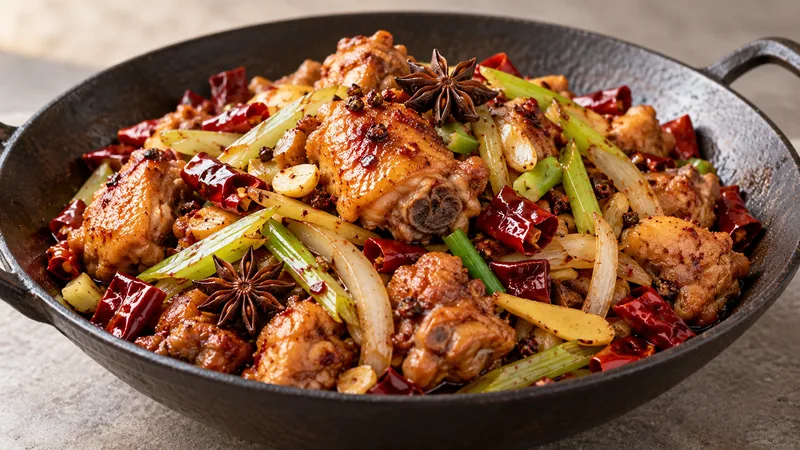
This Sichuan mala dry pot chicken is a published home-style version adapted from Asian Cooking Mom. It uses chopped bone-in chicken, onion and celery, with dried chilies, Sichuan pepper and doubanjiang. It is a source-based replacement for the incomplete directions, not a claim that an original lost formula has been recovered or that this site has tested it.
Quick Answer
Marinate the bone-in pieces in the refrigerator. Cook the chicken separately until its thickest meat reaches 74°C (165°F), then prepare the pepper-flavored oil and aromatics. Combine the cooked chicken with the vegetables and sauce, reduce excess liquid and finish with vinegar. Dry pot describes a coated stir-fry rather than a bowl of broth.
Basic Facts
| Batch | 4–6 portions; about 900 g bone-in half chicken |
|---|---|
| Marinade | 1/2 teaspoon kosher salt and 1 tablespoon cooking wine |
| Oil | 3 tablespoons neutral vegetable oil: 1 for chicken, 2 for aromatics |
| Aromatics | 5 cm ginger, 3 scallions, 6–10 garlic cloves, 2 fresh hot chilies |
| Spices and vegetables | 2 star anise, 1/2 cup dried chilies, 1 tablespoon Sichuan pepper, 1 tablespoon doubanjiang, 1 large onion, 3 celery stalks |
| Sauce | 2 tablespoons light soy, optional 1 tablespoon oyster sauce, 1 teaspoon sugar, 2 tablespoons hot water, 1/2 teaspoon black pepper |
| Finish | 1 teaspoon Chinese dark vinegar; keep separate until the end |
Prepare the bone-in chicken
Ask the butcher to chop the half chicken into manageable pieces, approximately 2.5 cm across, if cutting through bones is beyond your equipment or experience. Check cut surfaces for loose bone fragments. The 900 g amount includes skin and bone; replacing it with 900 g boneless breast changes both the batch and cooking behavior.
Mix the chicken with the measured salt and wine in a covered bowl. Refrigerate for the source’s 20–30 minute marination period, rather than leaving poultry on the counter. Keep the bowl contained below ready-to-eat food. A brief marinade seasons the meat; it does not cook or sanitize it.
Prepare vegetables on a separate clean board. Wash hands and clean utensils after handling raw chicken. Use a fresh plate and clean utensil for the cooked pieces. Do not return them to the raw-chicken bowl, and do not add unused raw marinade to the finished dish.
Organize vegetables and seasonings
Slice the onion and celery into thin long pieces that can cook during the final stir-fry. Mince the ginger, slice garlic, cut scallions into sections and chop the fresh chilies. Cut dried chilies into shorter segments. Keep the two star anise recognizable so they can be left aside when eating.
Combine light soy, the selected optional oyster sauce, sugar, hot water and black pepper in one bowl. Keep the measured vinegar separate. If omitting oyster sauce, do not invent a second soy dose to compensate: soy and doubanjiang already supply salt. Check actual sauce labels for wheat, soy and shellfish allergens.
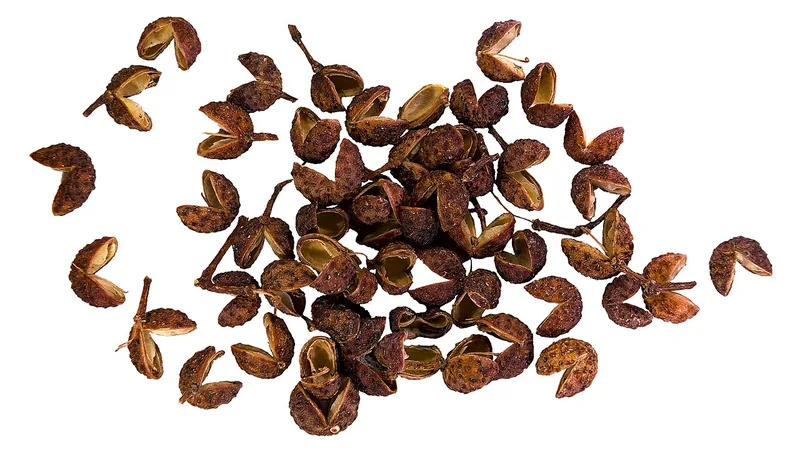
The pepper-husk illustration shows an ingredient, not the exact tablespoon or proof of any cooked batch. Remove obvious hard black seeds and foreign material from the culinary pepper husks before measuring. Heat and numbing preferences vary; choosing less chili or pepper is a deliberate variation, not a different assumed measurement.
Cook chicken before combining
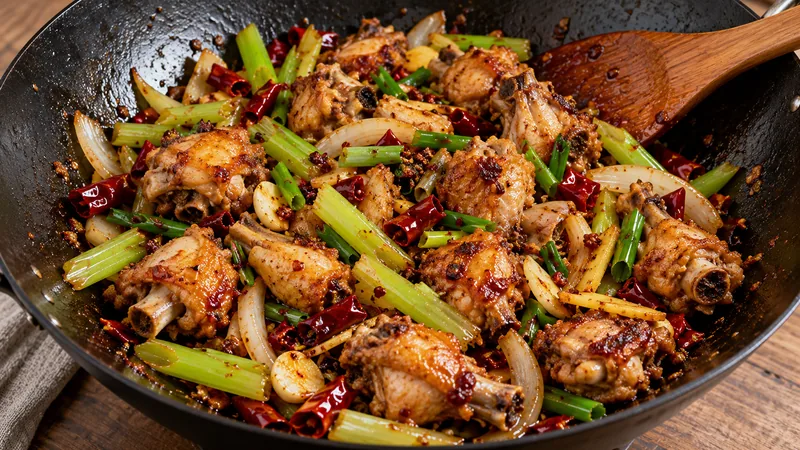
Heat a roomy wok or skillet and add the first tablespoon of oil. Add chicken carefully, lower to medium heat and turn pieces regularly. Let released moisture reduce while avoiding a burnt exterior. Work in batches if the pan is too crowded for even cooking.
Check several larger pieces with a food thermometer in the thickest meat, away from bone. Each must reach at least 74°C (165°F). Keep cooking pieces that are below this temperature. Neither clear juices nor lack of pink color proves safety, and the source’s rough cooking estimate is not a universal timer for different cuts or stove settings.
Move the cooked chicken to its clean plate. Clean the wok as needed before the aromatic stage. Keep the chicken ready for immediate recombination rather than setting it aside for a long room-temperature interval while other tasks are done.
Build mala flavor and finish
Add the remaining two tablespoons of oil. Briefly warm the measured Sichuan pepper until fragrant, lift it out while retaining the oil, then turn off the heat and crush the pepper separately. Avoid blackening it: burnt husks make the flavor bitter. This staged pepper treatment belongs to the selected home version.
Reheat the retained oil and stir in ginger, scallion, garlic, fresh chilies and star anise. Add dried chili, crushed pepper and doubanjiang, stirring briefly so the paste disperses without scorching. Return the fully cooked chicken, onion and celery; pour in the prepared sauce and toss to coat. Cook until the chosen vegetables are ready and excess watery liquid has reduced. Turn off heat and mix in the reserved teaspoon of vinegar.
Serve and store
Serve promptly using clean utensils. Bones remain in this version, so advise diners to eat carefully; whole star anise and hard bone fragments are not edible garnishes. A photograph cannot confirm internal temperature, batch weight or storage history.
Refrigerate leftovers promptly in shallow containers at 4°C (40°F) or below, within two hours, or within one hour when surroundings exceed 32°C (90°F). Reheat leftovers to 74°C (165°F). Do not rely on chile heat, salt or vinegar to make cooked poultry safe at room temperature.
Quick reference
Bone-in half chicken; chilled marinade; chicken fully cooked before vegetables; three tablespoons oil allocated once; pepper warmed and crushed; vinegar last. Preserve these stages when adjusting a later batch.
References
- Asian Cooking Mom: mala dry pot chicken
- FoodSafety.gov: clean, separate and chill
- FoodSafety.gov: poultry temperature
Frequently Asked Questions
Does 900 g mean boneless meat?
No. It is the approximate weight of the bone-in half chicken.
Can the marinade sit on the counter?
No. Marinate covered in the refrigerator.
Is the cooking time a safety guarantee?
No. Check thickest meat away from bone for74°C(165°F).
When is vinegar added?
After turning off the heat, following the selected home formula.
Is this the recovered original recipe?
No. This is an explicitly attributed source-based home version of the same dish.