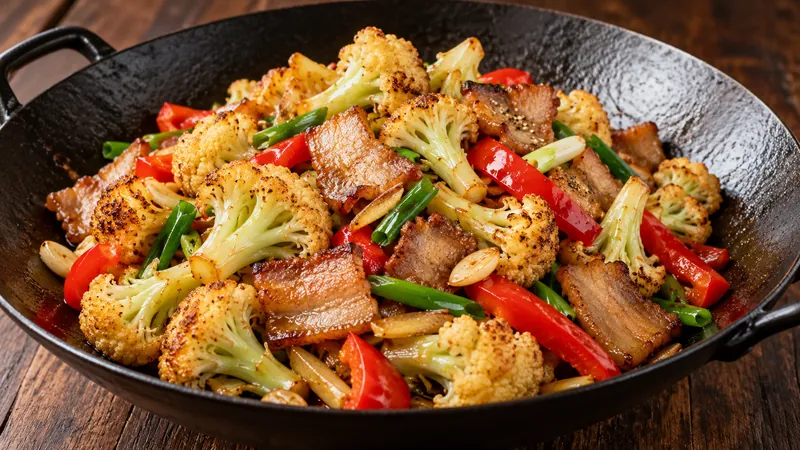
Dry-pot cauliflower is a hot wok dish with bite-size florets and a concentrated coating, rather than cauliflower floating in broth. This specified version includes a modest amount of thin pork belly, garlic, ginger and red pepper. Flowering cauliflower works, but ordinary cauliflower can also be used.
Quick Answer
Prepare bite-size cauliflower and thin pork belly, cook the aromatics and pork first, then stir-fry cauliflower and pepper with the measured seasonings. A small amount of water and brief covering can finish the florets; it is not a cold cucumber or chicken preparation.
Basic Facts
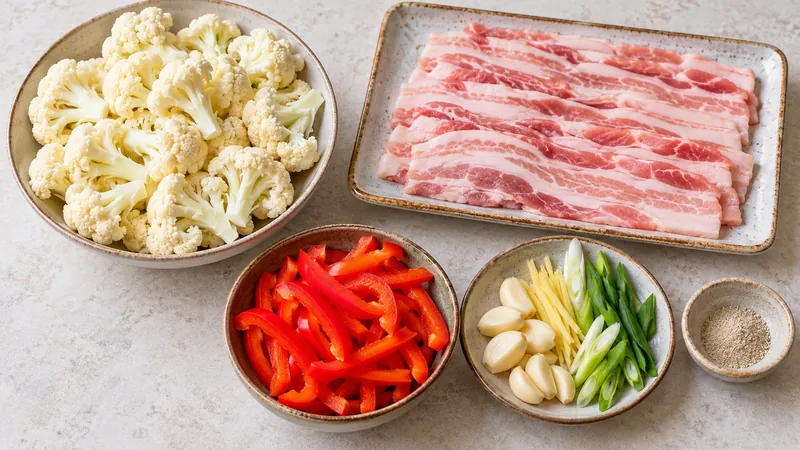
| Cauliflower | 450 g, bite-size florets |
|---|---|
| Pork | 225 g belly, thin bite-size slices |
| Aromatics | 10 garlic cloves; 4 ginger slices julienned; 3 scallions; optional 3 dried chilies |
| Vegetable | Half a red bell pepper, sliced |
| Cooking oil | 2 tablespoons |
| Version | Pork-belly version; not presented as vegetarian |
Sichuan dry pot cauliflower recipe prep
Refrigerate the pork while marinating it with 1/4 teaspoon salt, 1 teaspoon light soy and 2 teaspoons Shaoxing wine. Wash and cut the cauliflower into bite-size florets, then drain. Keep pork on its own raw-food surface and prepare garlic, ginger, optional dried chilies, red pepper and scallion separately.
For the final coating, set out 1 tablespoon light soy, 1 tablespoon Shaoxing wine, 1 teaspoon sesame oil, 1/2 teaspoon white pepper, 1 tablespoon oyster sauce, 1/4 teaspoon sugar and 1/2 cup water. The source lists a further 1/2 teaspoon salt, but add it only after considering soy and oyster sauce. Ordinary dense cauliflower may need a different finish time from flowering cauliflower.
Wok heat and sauce method
Warm the oil over medium heat. Cook the garlic briefly, then ginger and optional dried chilies without burning. Add the pork in a layer and cook thoroughly, then add cauliflower and red pepper. The meat and vegetable stages are hot cooking, not salting and chilling cucumber.
Use the measured white pepper in this coating.
Dry pot timing steps
Stir-fry the cauliflower and pepper briefly, then add the measured coating ingredients and water. Cover briefly to finish the florets, uncover and add scallion. Continue only as needed for a cooked texture and a coating without a large broth pool. The published one-to-two-minute covered finish is a starting point, not a guarantee for every floret size.
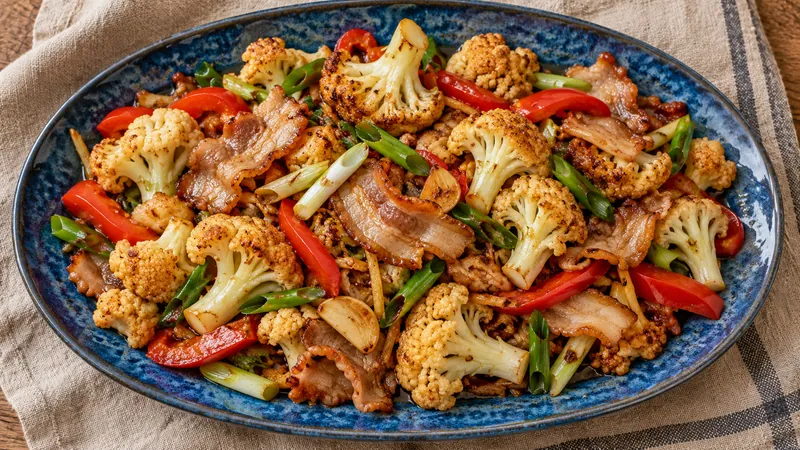
Keep cauliflower visible and intact. Thin pork slices should be cooked, and the red pepper should be recognizable. If the pan remains watery, check the added water and vegetable drainage rather than adding more soy. If the aromatics scorch, lowering their starting heat is more useful than covering them with extra sauce.
Serving texture and safety
For pork belly from a whole cut, verify 63°C (145°F) with a suitable thermometer and allow a 3-minute rest before serving. Do not use surface opacity or sauce color as the sole check. Ground pork is a different ingredient with a 71°C (160°F) endpoint and is not substituted silently here. Use a probe suitable for the thin pieces and clean it after contact with raw pork.
Refrigerate leftovers in shallow covered containers at 4°C (40°F) or below within two hours, or one hour above 32°C (90°F). Reheat leftovers to 74°C (165°F). Store the raw pork marinade bowl away from washed vegetables, and use a clean utensil to taste the finished coating. Check the oyster sauce for oyster or mollusk allergens, the soy for soy and wheat, and the sesame oil for sesame; no visible shellfish in the plate does not mean the sauce is shellfish-free.
Serve hot from the pan; a table burner is not required. This is a specified pork-belly version, so it should not be called vegetarian even though cauliflower is the principal vegetable. A vegetarian adaptation requires an explicit ingredient and flavor plan, not silently omitting meat while leaving the recipe unchanged.
Use clean tools for finished food and refrigerate leftovers promptly. Soy, oyster sauce and sesame may introduce allergens. Avoid raw and cooked pork sharing an unwashed board. Cauliflower density affects the covered stage: check the larger florets and their stems, and avoid reducing already tender pieces to a mash while waiting for an oversized piece.
Quick reference
Bite-size cauliflower and thin pork, aromatics first, hot stir-fry and brief covered finish with limited liquid. White pepper and Sichuan peppercorn are distinct; this chosen recipe is not vegetarian.
Recipe references
- thewoksoflife.com recipe reference
- thewoksoflife.com recipe reference
- FoodSafety.gov: pork and cooked-food handling
- FoodSafety.gov: pork and cooked-food handling
Frequently Asked Questions
Can ordinary cauliflower be used?
Yes. Adjust to actual floret density and doneness instead of assuming flowering cauliflower timing.
Does dry pot mean no water?
Not in this version. A small measured amount helps finish the florets; the result is not a broth dish.
Is this vegetarian?
No. This specified version includes pork belly and oyster sauce.
Are Sichuan peppercorns required?
No. The cited coating uses white pepper. The cited recipe uses white pepper in its coating.
Must it be served over a burner?
No. A hot serving from the pan is sufficient for this home version.