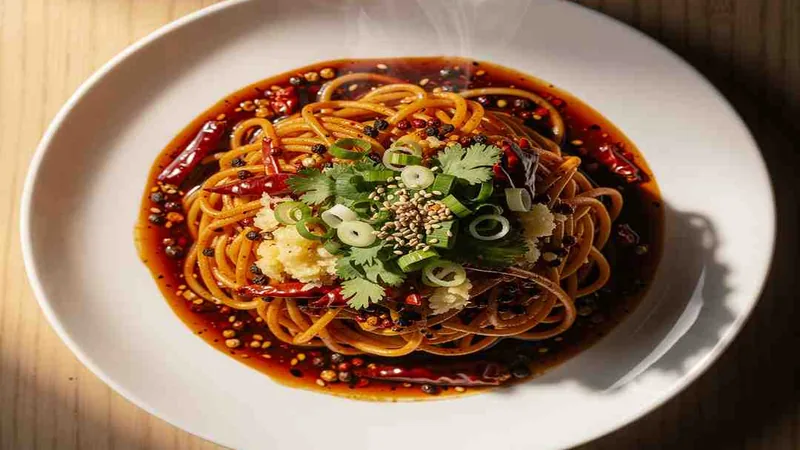
These Sichuan spicy noodles pair wheat noodles with a ground-pork doubanjiang sauce, bok choy, chili oil and Sichuan peppercorns. Cook the noodles separately, then combine them with the sauce in serving bowls.
It’s far from the generic spicy noodles you’ll find at chain restaurants; every element is rooted in Sichuan’s culinary heritage.
What sets it apart is its balance of five core flavors: málà (numbing-spicy), sweet, sour, salty, and aromatic. Unlike dishes such as Mapo Tofu or hot and sour soup, which share málà notes, authentic Sichuan spicy noodles are centered on chewy noodles coated in a rich, savory sauce.
This is the dish that turns first-time visitors to Sichuan into lifelong fans.
The Story Behind authentic Sichuan spicy noodles
Authentic Sichuan spicy noodles trace their roots to Dan Dan Noodles, a classic street food from 19th-century Chengdu. Vendors carried their ingredients on a wooden pole (called a dan dan) slung over their shoulders, selling bowls of noodles topped with minced pork, chili oil, and Sichuan peppercorn sauce.
The dish was cheap, filling, and packed with flavor—perfect for laborers working long days in the city’s markets.
Sichuan’s humid climate played a key role in shaping this cuisine. Local chefs learned that spicy, numbing ingredients helped dispel dampness from the body, making málà dishes a staple.
Over time, the recipe evolved slightly, but the core elements—fermented chili bean paste, Sichuan peppercorns, and chewy noodles—remained unchanged. Authentic Sichuan Spicy Noodles It’s also closely linked to other iconic Sichuan dishes, like Mapo Tofu (which uses the same Pixian doubanjiang) and hot and sour soup (with its balanced tang).
What Makes authentic Sichuan spicy noodles Special
The flavor profile of authentic Sichuan spicy noodles is all about málà, a unique combination of heat from chili peppers and a tingling numbing sensation from Sichuan peppercorns. This isn’t just random spice—it’s a carefully balanced mix.
The Sichuan peppercorns (known as hua jiao) release a citrusy, floral aroma when toasted, and their oil interacts with chili oil to create a multi-layered taste that lingers on the tongue.
Key techniques make this dish authentic. For example, stir-frying doubanjiang over low heat for 2 minutes unlocks its deep, umami flavors—skip this step, and the sauce will taste flat.
Toasting Sichuan peppercorns in a dry pan before grinding prevents bitterness and amplifies their aroma. Authentic Sichuan Spicy Noodles Even the noodles matter: fresh wheat noodles with a chewy texture hold the sauce better than dried or instant noodles.
Another unique trait is the balance of flavors. A pinch of sugar cuts the sharpness of chili, while rice vinegar adds a subtle tang that prevents the dish from being overwhelming.
Garlic and ginger add a fresh kick, and the ground pork provides savory depth. Authentic Sichuan Spicy Noodles Every component works together, not just to add heat, but to create a harmonious bite.
Ingredients for authentic Sichuan spicy noodles
- 300g fresh hand-pulled wheat noodles (or high-quality dried Sichuan noodles)
- 200g lean ground pork (preferably from pork shoulder)
- 2 tablespoons Pixian doubanjiang (fermented chili bean paste, drained of excess oil)
- 1 teaspoon Sichuan peppercorns (whole, not ground)
- 1 tablespoon high-quality Sichuan chili oil (plus extra for serving)
- 3 garlic cloves (minced finely)
- 1-inch fresh ginger (peeled and minced)
- 1 tablespoon light soy sauce (for saltiness and depth)
- 1 teaspoon dark soy sauce (for color)
- 1 tablespoon rice vinegar (unseasoned)
- 1 teaspoon granulated sugar (to balance flavors)
- 2 green onions (sliced, white and green parts separated)
- 500ml low-sodium chicken broth (or water for a lighter version)
- 1 small bok choy (chopped into 2-inch pieces)
- 1 tablespoon toasted sesame seeds (optional, for topping)
2 tablespoons neutral oil (peanut or canola), as specified in the cooking method.
How to Make authentic Sichuan spicy noodles
- Toast the whole Sichuan peppercorns in a dry, small skillet over low heat (120°C) for 1 minute. Stir constantly to avoid burning.
- Once fragrant, transfer to a mortar and pestle and grind into a fine powder. Authentic Sichuan Spicy Noodles Set aside.
- Heat 2 tablespoons of neutral oil (peanut or canola) in a wok over medium-high heat (160°C). Add the white parts of the green onions, minced garlic, and minced ginger.
- Authentic Sichuan Spicy Noodles Stir-fry for 30 seconds until the kitchen smells aromatic.
- Add the 200g ground pork to the wok. Use a spatula to break it into small crumbles. Authentic Sichuan Spicy Noodles Stir-fry for 3-4 minutes until fully cooked and slightly golden at the edges.
- Add the drained Pixian doubanjiang to the wok. Stir-fry for 2 minutes over medium heat.
- Authentic Sichuan Spicy Noodles This step is critical—letting the paste cook releases its deep, fermented flavors.
- Pour the 500ml chicken broth into the wok. Add light soy sauce, dark soy sauce, rice vinegar, and granulated sugar.
- Stir well to combine all ingredients. Bring to a gentle simmer, then reduce heat to medium-low.
- Authentic Sichuan Spicy Noodles Simmer for 5 minutes, stirring occasionally.
- While the sauce simmers, cook the noodles. Bring a large pot of salted water to a rolling boil (100°C).
- Add the fresh noodles and cook for 2-3 minutes (al dente). Authentic Sichuan Spicy Noodles If using dried noodles, cook for 5-6 minutes.
- Add the chopped bok choy to the noodle pot during the last 1 minute of cooking. Authentic Sichuan Spicy Noodles This keeps the bok choy crisp-tender.
- Drain the noodles and bok choy thoroughly. Authentic Sichuan Spicy Noodles Divide them evenly between two large serving bowls.
- Ladle the simmered sauce (with pork) over the noodles in each bowl. Authentic Sichuan Spicy Noodles Make sure to get plenty of the pork and sauce on each serving.
- Top each bowl with ½ teaspoon of ground Sichuan peppercorns, ½ tablespoon of chili oil, the green parts of the sliced green onions, and a sprinkle of toasted sesame seeds (if using).
- Toss the noodles gently with chopsticks before eating. Authentic Sichuan Spicy Noodles This mixes all the flavors together and ensures every bite has sauce.
Check minced pork with a food thermometer: ground pork should reach 160°F (71°C); browning or a fixed stir-fry time alone is not a safety check.
Common Mistakes with authentic Sichuan spicy noodles
The first big mistake is using the wrong doubanjiang. Many stores sell cheap, sweet chili bean paste that lacks the deep fermentation of Pixian doubanjiang.
This makes the sauce taste flat and overly sweet. Avoid this by buying authentic Pixian brand doubanjiang—look for the dark red, fermented version with a thick texture.
Authentic Sichuan Spicy Noodles Always drain excess oil before adding it to the wok.
Another mistake is toasting Sichuan peppercorns too long or too short. Overtoasting makes them bitter, while undertasting leaves no aroma.
The fix is simple: use low heat, stir constantly, and stop as soon as you smell a citrusy, floral scent. Authentic Sichuan Spicy Noodles Also, don’t skip grinding them fresh—pre-ground peppercorns lose their aroma quickly.
Finally, many people overdo the spices. Authentic Sichuan spicy noodles are balanced, not just hot.
Adding too much chili oil or Sichuan peppercorns makes it overwhelming and hard to eat. Start with the amounts in the recipe, then adjust to your taste.
A pinch of sugar can also help balance any too-spicy bites.
Serving & Storage
Serve authentic Sichuan spicy noodles immediately after making them. The noodles taste best when they’re hot and coated in the sauce.
For an extra kick, add a small side of extra chili oil on the table. Pair this dish with other Sichuan classics like hot and sour soup or steamed rice to round out the meal.
Pickled cucumbers also make a great side to cut through the spice.
If you have leftovers, store them separately. Keep the sauce (pork and all) in an airtight container in the fridge for up to 3 days.
Cook fresh noodles when you’re ready to eat—reheating leftover sauce and pouring over fresh noodles is better than storing noodles with the sauce, which makes them soggy. Authentic Sichuan Spicy Noodles Never freeze the noodles, as they’ll lose their texture.
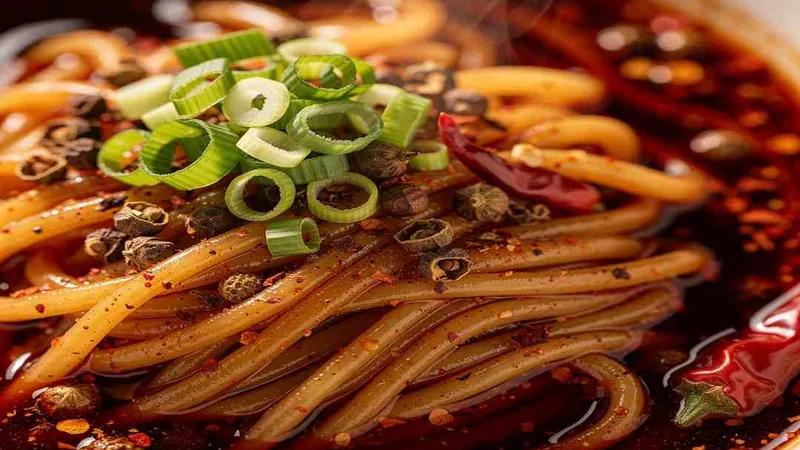
Can I use dried noodles instead of fresh?
Yes, dried Sichuan noodles work perfectly. Just add an extra 2 minutes to the cooking time to get a chewy texture—fresh noodles cook faster, so adjust accordingly.
Avoid instant noodles, as their texture is too soft and doesn’t hold the sauce well. Authentic Sichuan Spicy Noodles Dried noodles are a great backup if fresh ones aren’t available.
Is Sichuan peppercorn necessary?
Absolutely. The unique numbing (má) flavor from Sichuan peppercorns is what makes this dish authentic.
It’s not just a gimmick—it’s a core part of Sichuan cuisine’s identity. Authentic Sichuan Spicy Noodles If you can’t find whole peppercorns, use a small pinch of lemon zest as a substitute, but it won’t replicate the same citrusy, tingling sensation.
How spicy is authentic Sichuan spicy noodles?
It’s medium-spicy, balanced with savory and numbing notes. The heat comes from the chili oil, so you can adjust it to your tolerance: use 1 tablespoon for mild, 1.5 tablespoons for medium, and 2 tablespoons for spicy.
Authentic Sichuan Spicy Noodles The Sichuan peppercorns add a gentle tingle, not a harsh burn, so even people who don’t love super-spicy food can enjoy it.
Can I make this vegetarian?
Definitely. Swap the ground pork for 150g of cubed firm tofu (add it in step 4 when you add the doubanjiang) and use vegetable broth instead of chicken broth.
The tofu will absorb the sauce’s flavors perfectly, making it just as delicious as the original. Authentic Sichuan Spicy Noodles It’s a great option for vegetarians who want to try authentic málà flavors.
Do I have to use Pixian doubanjiang?
Pixian is the gold standard, but if you can’t find it, look for a fermented chili bean paste that’s been aged for at least 6 months. Skip regular chili sauce or sweet bean paste—they don’t have the deep, umami depth that Pixian doubanjiang provides.
Authentic Sichuan Spicy Noodles Aged doubanjiang has a richer, more complex flavor that’s key to authentic sauce.
Final Tip
The secret to great authentic Sichuan spicy noodles isn’t following a recipe to the letter—it’s paying attention to small details. Toasting the peppercorns, stir-frying the doubanjiang slowly, and balancing the flavors are what make it stand out.
Don’t be afraid to tweak the recipe to your taste—add more chili if you want it spicier, or a bit more vinegar for tang. Once you take that first bite, you’ll understand why this dish has been loved in Sichuan for centuries.
Authentic Sichuan Dry Pot Authentic Sichuan Boiled Fish Sichuan Soup Recipes Wikipedia