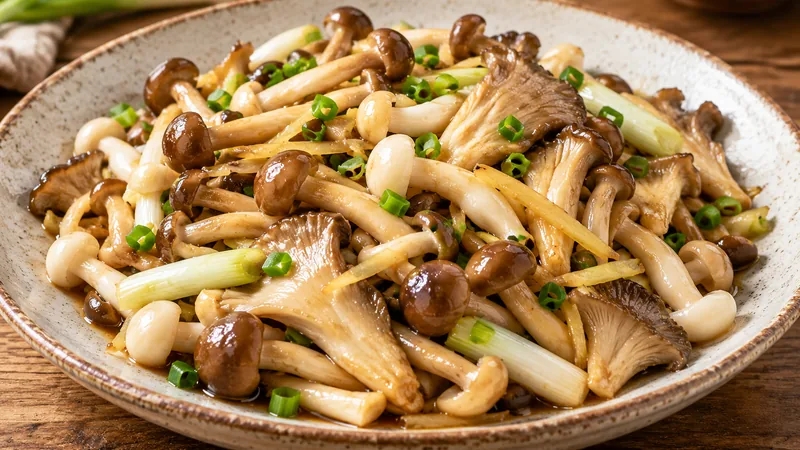
This mushroom stir-fry version is a mild Chinese home-style side made with brown and white beech mushrooms, ginger and scallion. It can accompany a Sichuan meal without being presented as a unique traditional regional specialty or a mandatory mala dish. The selected formula uses oyster and soy sauces; whole Sichuan peppercorns, chicken and cucumber are not ingredients.
Quick Answer
Trim the tough mushroom cluster bases, separate and clean the usable stems and caps, then drain well. Warm scallion whites and ginger in the cooking oil, cook the mushrooms and reduce their released liquid, then coat with the measured sauces and sesame oil. Serve the actual cooked mushrooms rather than transferring a noodle or cucumber method into the page.
Basic Facts
| Mushrooms | 1 cup brown beech mushrooms and 1 cup white beech mushrooms |
|---|---|
| Selected addition | 10 oyster-mushroom pieces, an optional source addition used here |
| Aromatic base | 4 scallion white parts and a thumb-size piece of shredded ginger |
| Cooking oil | 1 tablespoon neutral oil |
| Sauce | 1/2 tablespoon oyster sauce, 1/2 tablespoon light soy and optional 1 teaspoon dark soy |
| Finish | 1 teaspoon sesame oil; ground pepper to taste |
Choose and prepare the mushrooms
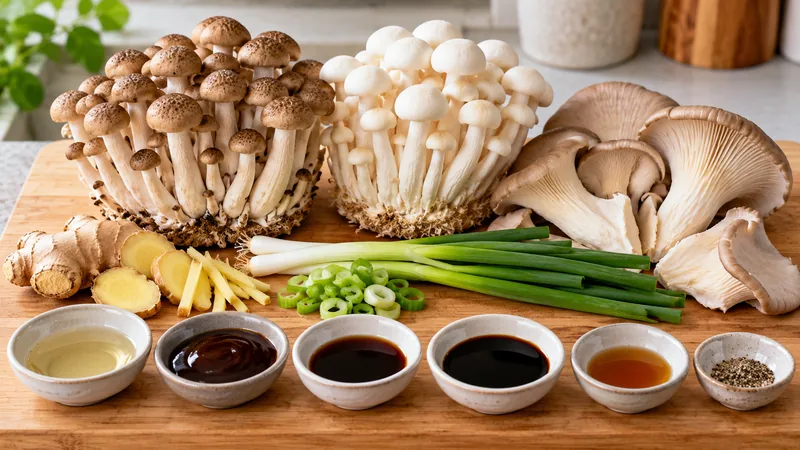
Use the measured brown and white beech-mushroom cups and the selected ten oyster-mushroom pieces. Cut away the tough joined base of each beech cluster; the usable stems and caps remain. Tear large oyster pieces into manageable sections if needed. These are recognizable edible cultivated mushrooms, not unidentified wild specimens chosen from a picture.
Cups and a piece count do not establish one universal gram conversion. Mushroom size, packing and trimming vary. Do not claim that the ingredient illustration demonstrates the measured quantity. A shiitake or button-mushroom substitution changes shape and cooking behavior, even though the source permits such alternatives.
Rinse quickly under running water if cleaning is needed, then drain thoroughly. Do not use soap. Keep a visibly wet pile from going straight into hot oil. Surface moisture and mushroom-released liquid are separate: draining helps the start, but mushrooms can still release water during cooking.
Measure aromatics and sauce
Separate the white portions of four scallions and cut them into small sections. Shred the thumb-size ginger piece. Reserve a modest amount of washed scallion greens for the optional serving garnish. Measure 1 tablespoon neutral cooking oil, 1/2 tablespoon oyster sauce, 1/2 tablespoon light soy, 1 teaspoon sesame oil and, if choosing the darker version, 1 teaspoon dark soy.
This recipe chooses the optional dark soy for color; it is not a second unmeasured spoonful added after tasting. Ground pepper is a finishing taste adjustment. Whole Sichuan pepper husks are not carried into this measured base merely because they appeared in an old image.
Check the actual oyster-sauce label. A vegetable-based mushroom dish is not automatically vegan if the sauce contains oyster ingredients. A vegan mushroom-based sauce is a deliberately chosen alternative and should be named as such. Soy and sesame are present in the selected version, and sauce labels may also identify wheat or shellfish.
Develop the aromatic base
Warm the neutral oil in a suitable pan and cook scallion whites over gentle heat until aromatic with light surface color. Add the ginger shreds without burning them. This is a small aromatic base, not a pot of soup or a deep-frying instruction. A dark burnt edge changes the flavor of every mushroom added afterward.
Prepare the receiving plate and serving utensils before starting. If scaling beyond a manageable pan load, plan batches rather than piling several times the mushrooms into a small pan. A crowded batch releases and traps steam differently; extra heat does not necessarily remove that water while preserving the aromatics.
Cook mushrooms and control released moisture
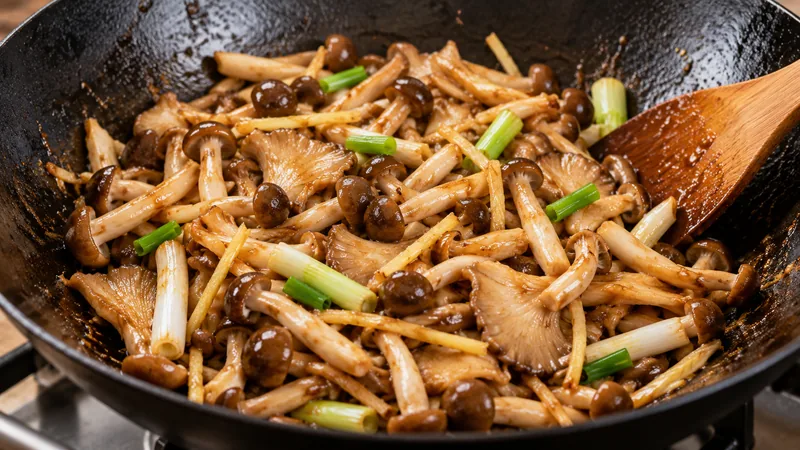
Add the prepared mushrooms and cook while turning so stems and caps heat evenly. Watch their released liquid. Continue actual cooking and let most of the excess liquid evaporate before the finish coating. The source gives a short approximate range, but size, load and pan shape mean that a timer alone does not establish texture.
The finished pieces should be cooked and tender, with identifiable stems and caps, rather than raw hard centers hidden under a glossy sauce. Do not use an illustration as a doneness test. If the pan is watery, address the cooking and evaporation instead of repeatedly adding salty sauce to make the liquid appear darker.
Add the measured oyster and soy sauces, including the selected optional dark soy, and turn to distribute. Finish with sesame oil and ground pepper to taste. Avoid reducing so aggressively that the sauce burns on the pan. This chosen sequence follows the source’s descriptive moisture-control instruction; its recipe card combines the sauces earlier, which is an alternate order rather than a requirement to add them twice.
Serve and handle leftovers
Transfer to a clean plate and add the optional scallion-green garnish. The serving image should show beech and oyster mushrooms with ginger and scallion, not a shredded-meat salad, tomato-and-egg wok or a bowl of whole spice husks. Rice may accompany the side but is not included in its cooking stage.
Refrigerate leftovers in shallow containers at 4°C (40°F) or below within two hours, or one hour above 32°C (90°F). Keep the ready-to-eat garnish away from raw-meat equipment used for other dishes. Reheat leftovers to 74°C (165°F), checking the food rather than judging only the pan temperature.
If choosing a different mushroom, record that change and assess its actual cooking needs. Do not identify a wild mushroom as edible from the illustration or from similarity to a supermarket cluster. This page is a source-based cultivated-mushroom cooking method with illustrations, not proof of the site’s own testing or a region-exclusive dish.
Quick reference
Trim and clean named mushrooms, drain, gently cook scallion whites and ginger, cook mushrooms and reduce excess liquid, then coat with measured sauces and sesame oil. Keep actual ingredient choice, moisture and allergen checks visible.
References
- China Sichuan Food: beech-mushroom stir fry
- FoodSafety.gov: washing and chilling
- FoodSafety.gov: leftover reheating
Frequently Asked Questions
Must a Sichuan meal side be intensely spicy?
No. This page selects a mild Chinese home-style mushroom formula and does not claim a unique region-exclusive dish.
Are whole Sichuan peppercorns part of this base?
No. They are not in the selected measured recipe; ground pepper is an optional finishing taste adjustment.
Is it automatically vegan?
No. The selected sauce can contain oyster ingredients; check labels and deliberately choose a vegan alternative if needed.
Does a cup equal a fixed mushroom weight?
No. Shape, trimming and packing vary; use the named amounts and do not invent a universal gram conversion.
Why is the pan watery?
Mushrooms release moisture. Cook and reduce the actual excess liquid before finishing rather than adding more salty sauce.